
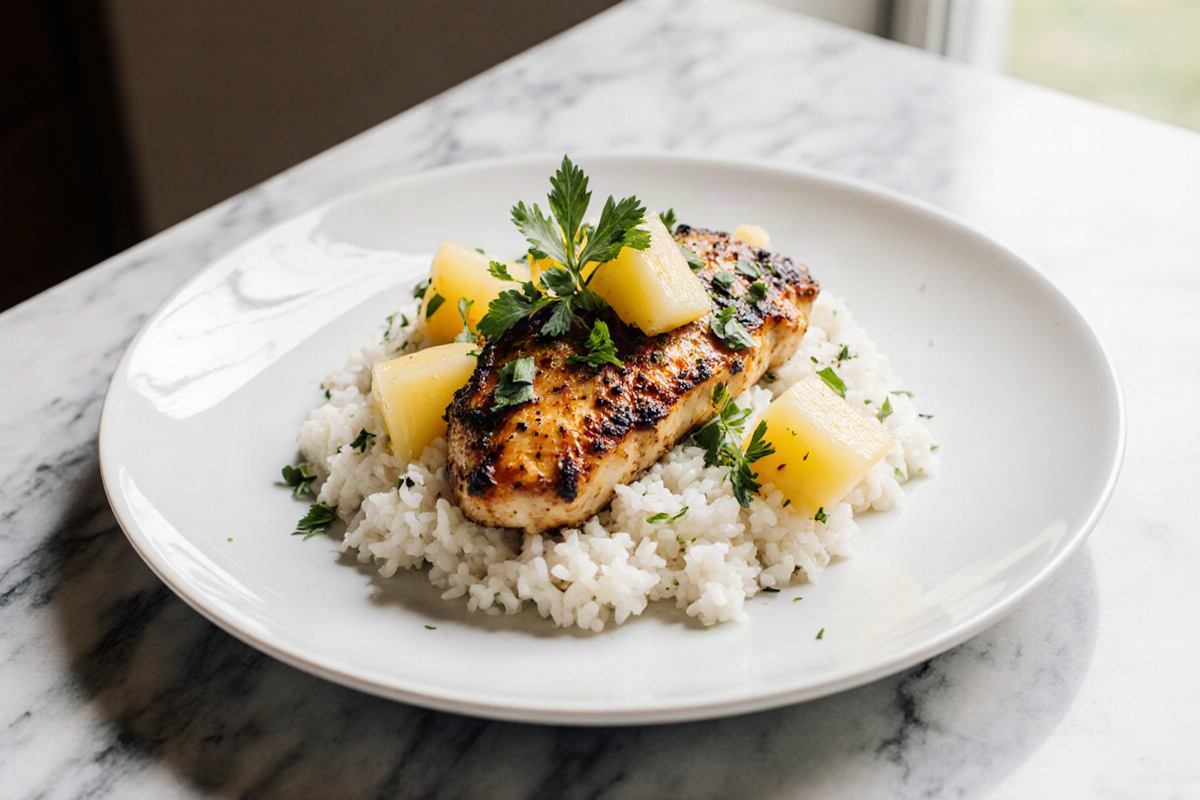
Hawaiian Chicken with Coconut Rice used to be one of those dishes I only made on weekends, because it felt fussy and easy to mess up. After testing different methods, I finally landed on a version that fits right into a busy weeknight. The steps are simple, the ingredients are easy to find, and the result is full of flavor without extra hassle. Once you try this approach, I think it will become a regular part of your dinner rotation too.
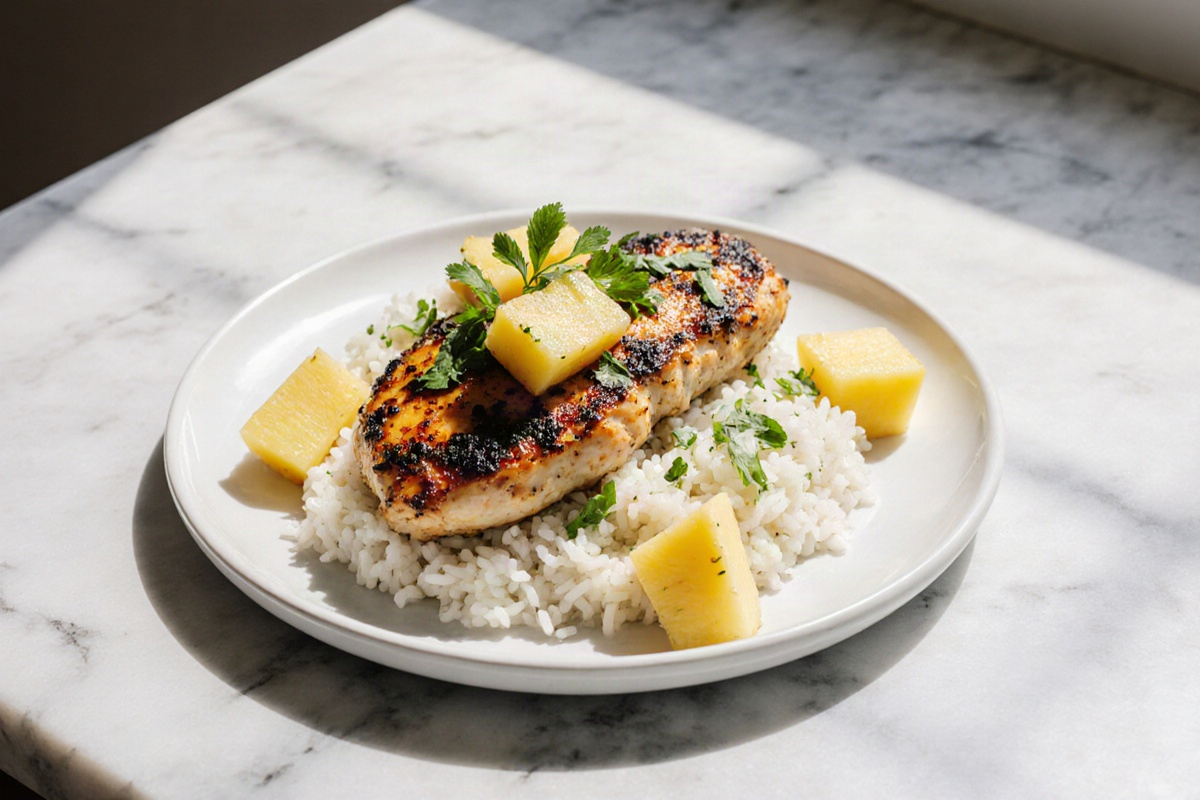
A taste of paradise in every bite!
Recipe Card – Hawaiian Chicken with Coconut Rice
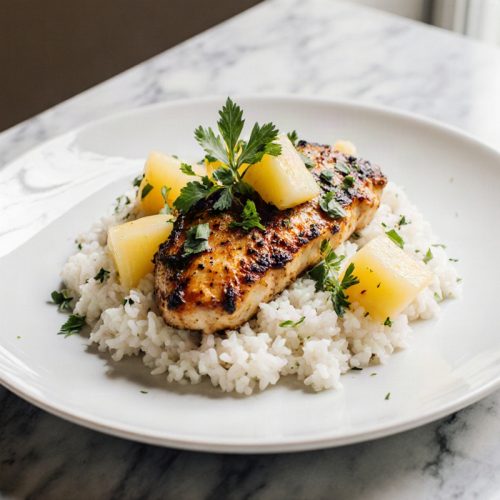
Hawaiian Chicken with Coconut Rice
Equipment
- Air Fryer
- Small pot
- Mixing Bowl
Ingredients
Ingredients
- 600 g Boneless, skinless chicken thighs about 4 pieces
- 250 g Long-grain rice rinsed
- 240 ml Coconut milk 1 cup
- 240 ml Water 1 cup
- 30 g Pineapple fresh or juice for marinade
- 15 ml Soy sauce or tamari for substitution
- 5 g Minced garlic for marinade
- 5 g Grated ginger for marinade
- 15 ml Olive oil for frying
Instructions
- In a mixing bowl, combine minced garlic, grated ginger, pineapple, soy sauce, and a splash of coconut milk to create the marinade. Add the chicken and ensure it is well coated. Let it marinate for 15-30 minutes.
- While the chicken is marinating, rinse the rice under cold water and then combine it with coconut milk, water, and a pinch of salt in a small pot. Bring to a gentle boil, then cover and simmer for about 15-20 minutes until tender.
- Preheat your air fryer to 190-200°C. Arrange the marinated chicken in a single layer and air fry for about 10-12 minutes, flipping halfway through.
- Once the chicken is cooked through (internal temperature should reach 74°C), let it rest for a couple of minutes.
- Serve the chicken over coconut rice and enjoy your Hawaiian meal!
Notes
Explore Hawaiian Chicken with Coconut Rice
Flavor Profile and Why It Works
Hawaiian Chicken with Coconut Rice combines bright tropical flavors with comforting textures. The chicken soaks up a sweet-sour balance from fruit-forward notes and a hint of coconut, while the coconut rice offers a creamy, aromatic base that ties everything together. Picture sunny pineapple, a touch of ginger and garlic, and a glossy glaze that enhances every bite. I’ve had my share of attempts that didn’t turn out quite right, but once the sauce reduces properly and the rice is fluffy, the flavors really sing. This combo works because the protein stays juicy thanks to a flavorful coating, and the richness of the coconut pairs beautifully with the zing of citrus and tang.
Coconut milk or cream adds richness, while pineapple or a pineapple-based glaze brightens the dish. The rice should soak up the sauce without getting soggy, creating a cohesive plate. You want that glossy finish to feel just right—smooth but not syrupy, with a touch of tropical warmth that lingers in your mouth. When cooking at home, aim for a glaze that’s sticky enough to coat the chicken without hardening into a brittle crust. Trust me, this step makes a world of difference in achieving restaurant-style flavor at home.
Here are a few practical tips to make it easy: keep the heat moderate so the sauce thickens nicely, and let the rice rest for a few minutes off the heat to fluff up. The combo of seared chicken and coconut rice is always a hit, making it perfect for weeknights or casual gatherings. With the right balance of sweetness, acidity, and creamy rice, Hawaiian Chicken with Coconut Rice becomes an easy and comforting favorite with a subtle tropical twist.
Best Cuts of Chicken to Use
When you want juicy, flavorful chicken, thighs are tough to beat. Boneless, skinless chicken thighs stay moist during a quick sauté or air-fry session and don’t dry out easily, even if you leave them on the heat a moment longer. If you need a quicker-cooking option, boneless, skinless chicken breasts will do, but they can dry out more easily, so be sure to plan shorter cook times and a gentle finish in the glaze. For deeper flavor, consider bone-in, skin-on cuts, then finish with skin-off for a crisp edge. The key is to keep an eye on internal temperature and let the meat rest so the juices can redistribute—this way, your chicken stays juicy.
To get great flavor, marinate your chicken or use a glaze with a little fat and acid. If you’re watching your sodium intake, reduce the salt in the marinade and balance it with sweetness from citrus or pineapple. Regardless of the cut you choose, pat the surface dry before cooking to encourage browning and a crisp exterior. Letting the chicken rest for a few minutes after cooking keeps the juices in and allows the glaze to set, giving you that glossy, restaurant-worthy finish. Remember, the higher-fat cuts like thighs can handle longer cook times without drying out, making them a reliable choice for this dish.
Nutrition and Health Information
Calories and Macros Per Serving
The calorie and macro estimates for Hawaiian Chicken with Coconut Rice change based on portion size and ingredients. A standard serving generally hits around 500–650 kcal, reflecting protein-packed chicken and creamy coconut rice, with carbohydrates forming the bulk of the meal. If you’re aiming for a balanced plate, think in terms of approximate ranges rather than precise numbers. For a rough plan, consider protein in the range of 25–35 g, carbs between 60–85 g, and fats coming mainly from the coconut and any added oil. How you prepare the dish (like using light coconut milk) will shift these numbers, so treat them as a helpful guideline.
If you’re tracking your macros closely, exact values depend on the size of the chicken piece, how much rice you serve, and whether you add extra vegetables or more glaze. If you’re cooking for kids or active folks, you can adjust by adding extra veggies or a smaller portion of rice to balance things out. The important thing is to maintain consistency in portion sizes, so you can compare meals and stick to your nutrition goals throughout the week.
Key Vitamins and Minerals
Chicken provides high-quality protein along with essential nutrients like B vitamins and selenium, which help with energy metabolism and immune function. Coconut offers some healthy fats and minerals, including manganese, which supports metabolism and bone health. Pineapple packs vitamin C and manganese as well, contributing to antioxidant protection and collagen support. Together, these ingredients create a meal that’s satisfying and offers a nice boost of vitamins and minerals.
To enhance nutrition, pair the dish with colorful veggies—think steamed broccoli, peppers, or snap peas—to add fiber, more vitamins, and a great texture. You can lighten up coconut rice by mixing in water or adding a dash of lime juice for brightness. Those small adjustments help you enjoy a comforting plate while keeping an eye on the nutrients.
Healthier Swaps and Portion Tips
If you’d like to lighten the dish, consider using light coconut milk or swapping some of it with water. Leaner proteins like skinless chicken breast can decrease fat content but may require careful cooking to avoid drying; be sure to monitor internal temperature and let the meat rest. Adding more vegetables on the plate boosts fiber and volume without drastically increasing calories per serving. For controlling sauce, simmer it until it evenly coats the chicken instead of pooling at the bottom.
Portion control matters: aim for a palm-sized chicken portion and a cupped handful of rice per person, plus plenty of vegetables. If you’re feeding kids, you can dial down the sugars or salt in the glaze and offer a fruit-forward finish to keep flavors approachable. Those small adjustments really can add up over a week of meals, making Hawaiian Chicken with Coconut Rice enjoyable without feeling heavy.
How to Make Hawaiian Chicken in the Air Fryer
Marinade Ingredients
A simple and flavorful marinade lays the groundwork for juicy chicken with a beautiful finish. Think of a balance of salty, sweet, and aromatic elements to match those tropical vibes. The key is to keep the mix flexible so you can adjust based on what you have at home. Start with a base of savory seasonings, a splash of acidity to help tenderize, and a hint of sweetness to echo the coconut and fruit. If you have pineapple juice or even a little piece of pineapple, toss it in for an extra tropical kick.
Add minced garlic and grated ginger for extra depth. A splash of soy or tamari brings a savory umami that helps the glaze stick. If you’re avoiding soy, a dash of black bean sauce or miso can serve as a substitute. The marinade should coat the chicken thoroughly; you want enough to glaze without excessive pooling. Marinate for at least 15–30 minutes if you can, or go right into air frying with a light brush of leftover marinade.
Air Fryer Temperature and Timing
Preheat your air fryer to about 190–200°C (375–400°F) for the best browning and juicy chicken. Lay the marinated chicken in a single layer, leaving room for air to circulate; overcrowding leads to uneven cooking and soggy edges. Cook for roughly 10–12 minutes, flipping it halfway through to ensure even color and doneness. The chicken should hit an internal temperature of 74°C (165°F) to be safe, and the outside should look crisp and slightly caramelized.
While the chicken cooks, you can whip up some quick coconut rice to serve on the side. If you notice the glaze thickening too fast, lower the heat a bit and brush on more glaze in the final minutes for that sticky, glossy finish. Let the meat rest for a couple of minutes before serving to keep the juices intact and the flavors concentrated.
How to Make Coconut Rice
Rinse 1 cup of long-grain rice under cold water until the water runs clear. In a small pot, combine the rinsed rice with 1 cup coconut milk and 1 cup water, plus a pinch of salt. Bring it to a gentle boil, then reduce to a simmer, cover, and cook for about 15–20 minutes until the liquid is absorbed and the rice is tender. Remove from heat and let it sit, covered, for 5 minutes, then fluff with a fork. You want the rice to be fragrant, fluffy, and not sticky.
If you’re short on time, you can make coconut rice with pre-cooked rice—just stir in a bit of coconut milk and a pinch of salt to pump up the flavor. A little fresh lime zest added at the end brings a brightness that complements the pineapple glaze on the chicken. A squeeze of lime or a sprinkle of herbs can really elevate the dish quickly.
Tips, Mistakes, and Flavor Boosters
How to Get Crispy Edges
To achieve crispy edges, keep the chicken dry and use hot air. Pat the chicken dry before coating, and don’t overcrowd the air fryer basket. A light spray of oil can help with browning without leaving the chicken greasy. Flip the pieces halfway through so both sides get that even crispiness. If you want extra crunch, finish with a quick broil for 1–2 minutes—just watch closely so you don’t burn it.
Another trick is to glaze in the last few minutes of cooking so the sugar in the glaze caramelizes and sticks to the chicken. A small brush or spoon works well for applying just enough glaze to adhere without pooling. You’ll end up with a shiny crust that clings to the meat while remaining tender inside.
How to Avoid Dry Chicken
Dry chicken is a nightmare for any home cook. Choose thighs for more forgiving moisture, and invest in a thermometer to avoid overcooking. If you go with breasts, shorten the cooking time and consider marinating longer to help retain moisture. Let the meat rest for 5–10 minutes after cooking so the juices redistribute. If dryness sneaks in, pair the chicken with extra sauce or add a splash of coconut milk near the end of cooking to keep it moist.
A good practice is to pat the chicken dry, coat it lightly with oil, and season well before cooking. This forms a protective layer that helps seal in moisture. Remember, letting the chicken rest before serving results in a juicier and more flavorful bite, even if the glaze has firmed up a bit.
How to Keep Rice Fluffy
The goal for rice is to be light and separate, not dense or mushy. Rinse it well to get rid of excess starch, and use the right liquid-to-rice ratio. Once the rice is done cooking, let it rest off the heat for a few minutes and fluff it with a fork to separate the grains. If you’re doubling the recipe, keep that ratio consistent and consider using a rice cooker or a pot with a heavy lid for even steaming.
When reheating, just sprinkle a little water and cover it to re-steam, avoiding the microwave’s knack for making rice sticky. Freshly cooked coconut rice is best served warm, with that lovely coconut aroma drawing you in for the next bite. A quick burst of lime zest or some chopped herbs can keep leftovers feeling fresh and exciting.
Variations and Side Dishes
Popular Flavor Variations
If you feel like changing things up, try a pineapple-ginger glaze with a splash of lime for an extra kick, or a teriyaki-inspired version with sesame for a different sweet-savory twist. For a coconut-forward option, use light coconut milk and adjust the sweetness with a splash of lime juice. A ginger-chili twist adds warmth and a gentle kick while still keeping the dish approachable.
For a kid-friendly take, tone down the heat and make a milder glaze with more fruity sweetness. You can stick with coconut rice as the base; just be sure the sauce isn’t too spicy or strongly flavored by contrast. The idea is to keep that tropical feel while ensuring the dish appeals to everyone.
Best Side Dishes
Great sides include steamed or roasted vegetables that contrast nicely with the rich rice and chicken, like broccoli, green beans, or bell peppers. A light fruit salsa, cucumber-avocado salad, or a refreshing mango slaw can brighten up the plate and add some freshness. If you’re in the mood for bread, a warm crusty loaf or garlic naan is perfect for mopping up the glaze and rounding out the meal.
You could also serve a simple green salad dressed with citrus or a tangy vinaigrette to keep the sweetness in check. A side of quinoa or brown rice makes a good alternative to coconut rice if you’re looking for a different texture or nutrition profile.
FAQ – Hawaiian Chicken with Coconut Rice
Frequently Asked Questions
Q: Can I use chicken breasts instead of thighs?
A: Yes, but watch the cook time; breasts dry out more easily, so shorten cook time and monitor temperature carefully.
Q: Can I make this on the stovetop instead of air frying?
A: Absolutely; sear the chicken in a skillet, then simmer with glaze until thickened, and cook coconut rice separately.
Q: How long do leftovers last?
A: Store in an airtight container in the fridge for 3–4 days; reheat gently to avoid drying, and add a splash of coconut milk if needed.
Conclusion
When you pull Hawaiian Chicken with Coconut Rice off the stove, you’ll be greeted with a mouthwatering aroma that invites you to dig in. The chicken will boast a glossy glaze that clings perfectly to its surface, with a tender, juicy inside. The coconut rice will be fluffy and fragrant, providing a wonderfully creamy base that balances the dish beautifully. Give it a try – you might be surprised how simple and satisfying this recipe can be on a busy weeknight.