
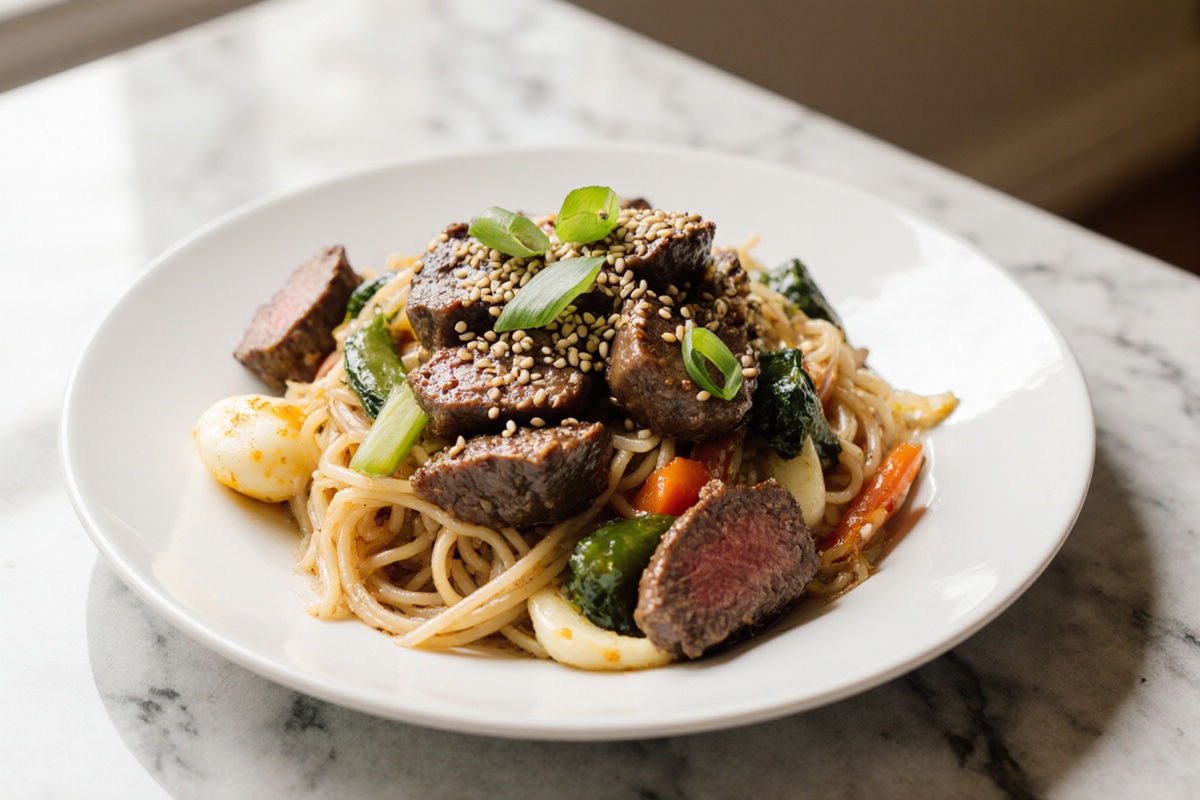
Korean Beef Noodles used to be one of those dishes I only made on weekends because it felt fussy and easy to mess up. After testing different methods, I finally landed on a version that fits right into a busy weeknight. The steps are simple, the ingredients are easy to find, and the result is full of flavor without extra hassle. Once you try this approach, I think it will become a regular part of your dinner rotation too.
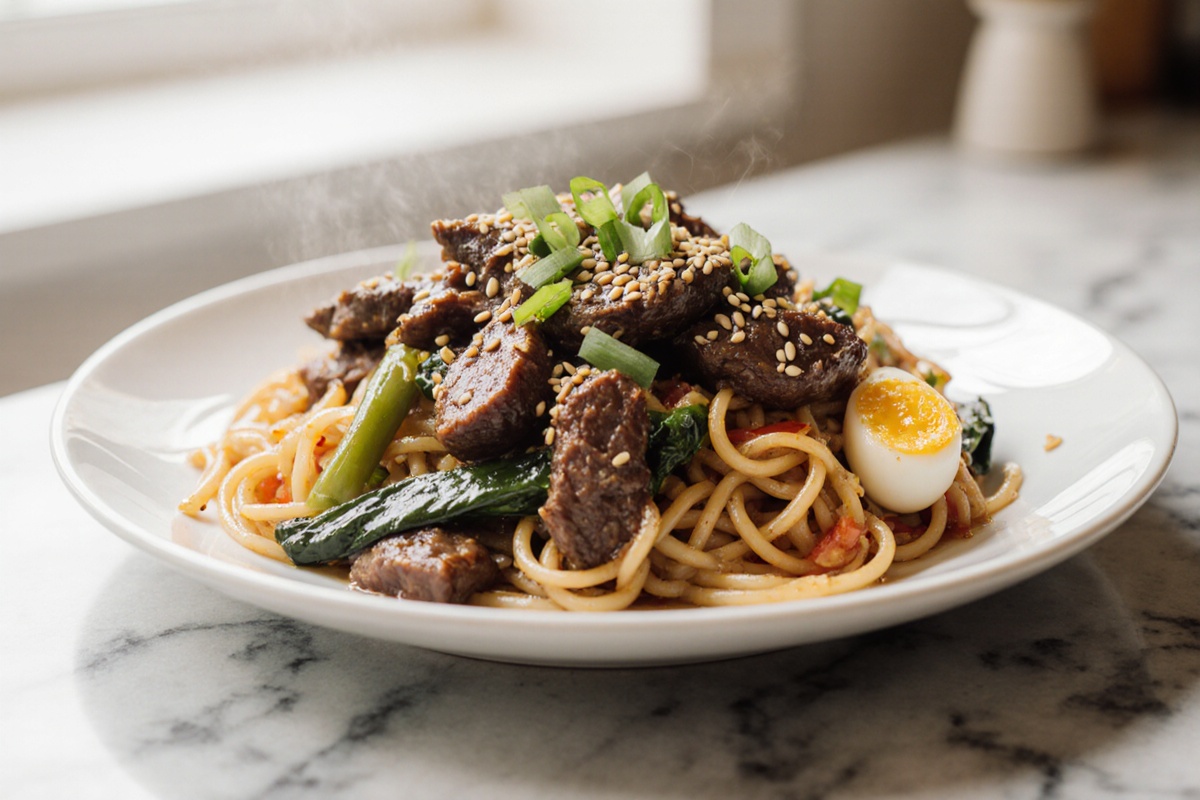
Recipe Card – Korean Beef Noodles
Easy Korean Beef Noodles
Equipment
- Air Fryer
- Pan
- Mixing Bowl
Ingredients
Ingredients
- 400 g Beef sirloin thinly sliced
- 200 g Noodles egg or wheat-based
- 30 ml Soy sauce
- 1 clove Garlic minced
- 5 g Ginger grated
- 15 ml Sesame oil
- 5 g Brown sugar optional
- 150 g Mixed vegetables bell peppers, broccoli, mushrooms
- 15 g Sesame seeds
- 2 Green onions sliced
- 150 ml Water or low-sodium broth
Instructions
- Preheat the air fryer to 204°C.
- Toss the beef with soy sauce, garlic, ginger, sesame oil, and brown sugar; let it marinate for 10–15 minutes.
- Air fry the beef for 6–8 minutes, shaking halfway, until just cooked through.
- Meanwhile, cook the noodles according to package directions until al dente, then drain.
- In a pan, combine the cooked beef, noodles, and vegetables; toss with a little extra sauce and a splash of water or broth to loosen things up.
- Serve hot, sprinkled with sesame seeds and green onions.
Notes
More Favorites from My Kitchen:
Longhorn Steakhouse Parmesan Chicken Recipe
Chicken Scampi with Garlic Parmesan Rice recipe
Or go to my Pinterest.
What Are Korean Beef Noodles?
Origin and Popularity in the USA
Korean Beef Noodles blend comforting noodles with bold, savory flavors that take you back to the lively streets of Korea. Over the past few years, these dishes have found a cozy spot in American kitchens, where home cooks look for something vibrant yet easy to prepare. Think of it as a quick weeknight meal that pays homage to Korean barbecue, without requiring a ton of hard-to-find ingredients. I’ve made versions that brought smiles to my family’s faces, so believe me when I say this dish is a real winner.
In the U.S., Korean-inspired beef noodles often appear as a fun fusion—meaty, glossy, and satisfying with a bit of heat or sweetness. The combination of noodles and beef is familiar, but the seasoning adds a delightful twist that makes it feel special even on busy nights. If you’re just getting into Korean flavors, this dish is a fantastic starting point: rich, slightly sweet, and wonderfully umami without being too strong. It’s the kind of meal you can adapt to whatever you have on hand.
Key Ingredients Breakdown
At its core, Korean Beef Noodles come together with protein, noodles, and aromatic flavors, all coated in a glossy glaze. Beef gives that rich, meaty backbone, while noodles deliver that comforting bite we all love. Aromatics and seasonings—like garlic, ginger, and soy sauce—bring everything together with a savory base. A splash of sesame oil adds a nutty finish, and a mix of vegetables brightens it all up. The result is a balanced, mouthwatering bowl that you can customize to your taste.
Think of the dish as a stage where a few big flavors shine: a hint of sweetness, a burst of soy or miso flavor, and just the right amount of heat if you enjoy that. The beauty lies in its flexibility—you can emphasize the beefy notes or add more greens to lighten things up. Plus, it’s a fantastic way to use up leftovers; protein and noodles turn into a meal with little effort.
Nutrition Facts and Health Benefits
Calories and Macros Per Serving
The calories and macros for Korean Beef Noodles can change based on your ingredient choices and portion sizes. If you’re looking for a healthier option, consider choosing leaner cuts of beef, adding more veggies, and going for a light or low-sodium sauce. This dish typically offers a good amount of protein with a sensible portion of carbohydrates and some fiber from the vegetables. To fit it to your nutritional goals, keep an eye on the portions of beef, noodles, and vegetables, adjusting the sauce and oil as needed.
If you’re mindful of macros, try to fill about half your plate with veggies, a quarter with protein, and a quarter with starch. Then you can tweak the fat by controlling the amount of oil and sauce. With smart swaps—like lean beef, whole-grain or chickpea noodles, and more veggies—you can modify Korean Beef Noodles to fit different dietary needs without losing flavor.
Tips for Healthier Versions
To lighten up this dish, go for lean cuts of beef and trim off any visible fat. Pile on the vegetables: peppers, broccoli, mushrooms, and leafy greens add fiber and color without many calories. Use low-sodium soy sauce or tamari and cut down on added sugar or honey in the glaze. Cook the beef until it’s just done to keep it juicy. Lastly, serve with a smaller portion of noodles and plenty of veggies to add volume and nutrition.
If you want to boost nutrition even more, toss in some chopped leafy greens right before serving so they wilt nicely in the heat. You’ll gain extra vitamins with hardly any extra effort. And don’t forget to squeeze some fresh lime or splash a bit of rice vinegar on top for a bright touch without piling on calories.
Easy Korean Beef Noodles Recipe (Air Fryer)
ingredients List
- 400 g beef sirloin, thinly sliced
- 200 g noodles (egg or wheat-based)
- 2 tablespoons soy sauce
- 1 clove garlic, minced
- 1 teaspoon grated ginger
- 1 tablespoon sesame oil
- 1 teaspoon brown sugar (optional)
- 1 cup mixed vegetables (bell peppers, broccoli, mushrooms)
- 1 tablespoon sesame seeds
- 2 green onions, sliced
- 150 ml water or low-sodium broth
This air fryer method keeps things straightforward while delivering a glossy, flavorful outcome. If you don’t have a specific noodle type on hand, feel free to use what you like, and keep your vegetables colorful for an appealing bowl. The focus here is on quick searing and a balanced glaze that hugs every strand.
Step-by-Step Instructions
- Preheat the air fryer to 400°F (204°C). This warm start helps lock in the juices and create a light crust on the beef.
- Toss the beef with soy sauce, garlic, ginger, sesame oil, and brown sugar; let it marinate for 10–15 minutes if you have the time.
- Air fry the beef for 6–8 minutes, shaking halfway, until just cooked through.
- Meanwhile, cook the noodles according to package directions until al dente, then drain.
- In a pan, combine the cooked beef, noodles, and vegetables; toss with a little extra sauce and a splash of water or broth to loosen things up.
- Serve hot, sprinkled with sesame seeds and green onions. If you enjoy a bit of heat, add a pinch of red pepper flakes. This method yields tender beef with a glossy coating and crisp-tender veggies.
If you’re short on time, you can skip the marinating and still achieve a delightful result, but a brief marinade really boosts the flavor and tenderness. Letting the beef rest for a minute after air frying helps it stay juicy. And if the sauce seems a bit thick, a splash more broth will loosen it up without washing away the glaze.
Common Mistakes to Avoid
Avoid overcooking the beef in the air fryer, as this can dry it out. Don’t skip preheating; starting with a cold fryer can lead to uneven cooking. If the sauce gets clumpy, just add a splash of broth while tossing it all together and give it a quick stir. Also, be cautious with saltiness: soy sauce is salty, so taste before serving and adjust as needed. Lastly, don’t undercook the noodles; always cook them a minute or two less than the package instructions and finish them in the pan with the beef and veggies.
Delicious Variations and Pairings
Low-Carb and Veggie Options
Swap noodles for veggie-based options like zucchini noodles (zoodles) or shirataki noodles to make a low-carb version of Korean Beef Noodles. Pump up the vegetable content by adding thinly sliced peppers, broccoli florets, and mushrooms for extra fiber and fullness. If you want to up the protein without adding more carbs, throw in a handful of shrimp or tofu chunks at the end. For a veggie-centric version, double the greens and cut back on the noodles, keeping the glaze bright and flavorful. The air fryer technique still works well with these changes, preserving that chewy texture with less starch.
You can also use cauliflower rice as a base for the beef and veggies, making the dish feel lighter while still boasting satisfying flavors. The spices and aromatics shine through using the same marinade base, so you won’t lose that essential Korean-inspired taste. It’s a friendly way to tweak the dish for different dietary needs without sacrificing flavor.
Best Side Dishes
A refreshing cucumber salad with a light rice vinegar dressing pairs beautifully with the rich beef glaze. Kimchi or pickled vegetables add tang and mild heat that complement the flavors of Korean Beef Noodles wonderfully. Steamed or roasted greens, like bok choy or broccoli, provide texture and color to complete your plate. A simple sesame-scallion rice or warm bread on the side works well to soak up any extra sauce and round out the meal. If you’re entertaining guests, a light miso soup or clear broth with herbs serves as a cozy starter.
Video: These 15 Minute Ground Beef Chili Garlic Noodles Will …
FAQ – Korean Beef Noodles
What is Korean beef noodles?
Korean Beef Noodles is a dish that pairs beef with noodles in a savory, often slightly sweet glaze inspired by Korean flavors. It typically features a glossy sauce made from soy, garlic, and sesame, with vegetables for color and crunch. The exact recipe varies, but the core idea is a satisfying bowl that’s both comforting and flavorful. It’s a versatile dish you can tailor to your spice tolerance and pantry.
Are Korean beef noodles healthy?
Like many comfort foods, they can be healthy or indulgent depending on ingredients and portions. Lean beef, plenty of vegetables, and a moderate amount of noodles or an alternative like zucchini noodles can make it a balanced choice. Using low-sodium sauces and limited added sugar also helps. The dish provides protein, fiber from vegetables, and complex flavors that can satisfy without heavy sauces or excessive oil.
Can I make it low carb?
Yes. Swap noodles for low-carb options like zucchini noodles or shirataki, and load up on vegetables. You can maintain the same glaze and cooking method, adjusting quantities to keep the dish satisfying while reducing carbohydrate content. The air fryer method works well with these substitutions, preserving texture and depth of flavor.
How spicy is it?
Spice level is highly adjustable. If you like heat, add a pinch of red pepper flakes or a dash of chili paste to the marinade or glaze. Start small, taste as you go, and increase gradually to reach your preferred intensity. If you’re cooking for kids or sensitive diners, you can omit the heat altogether and rely on the savory balance of garlic, ginger, and sesame.
What’s the best noodle type?
The dish works well with a variety of noodles. Egg noodles or wheat-based noodles provide a chewy bite that contrasts nicely with the beef glaze. Rice noodles are another good option for a lighter, more delicate texture. Choose what you like best and what your pantry offers; the sauce will cling to noodles of differing shapes with equal gusto.
Conclusion
Once your Korean Beef Noodles are ready, you’ll be greeted with a bowl of glossy noodles coated in a rich, savory sauce, all topped with vibrant veggies and a sprinkle of sesame seeds. The aromas wafting through your kitchen are simply irresistible, and the colors are as inviting as the flavors are satisfying. Trust me, you can do this! Give it a try – you might be surprised how simple and satisfying this recipe can be on a busy weeknight.