
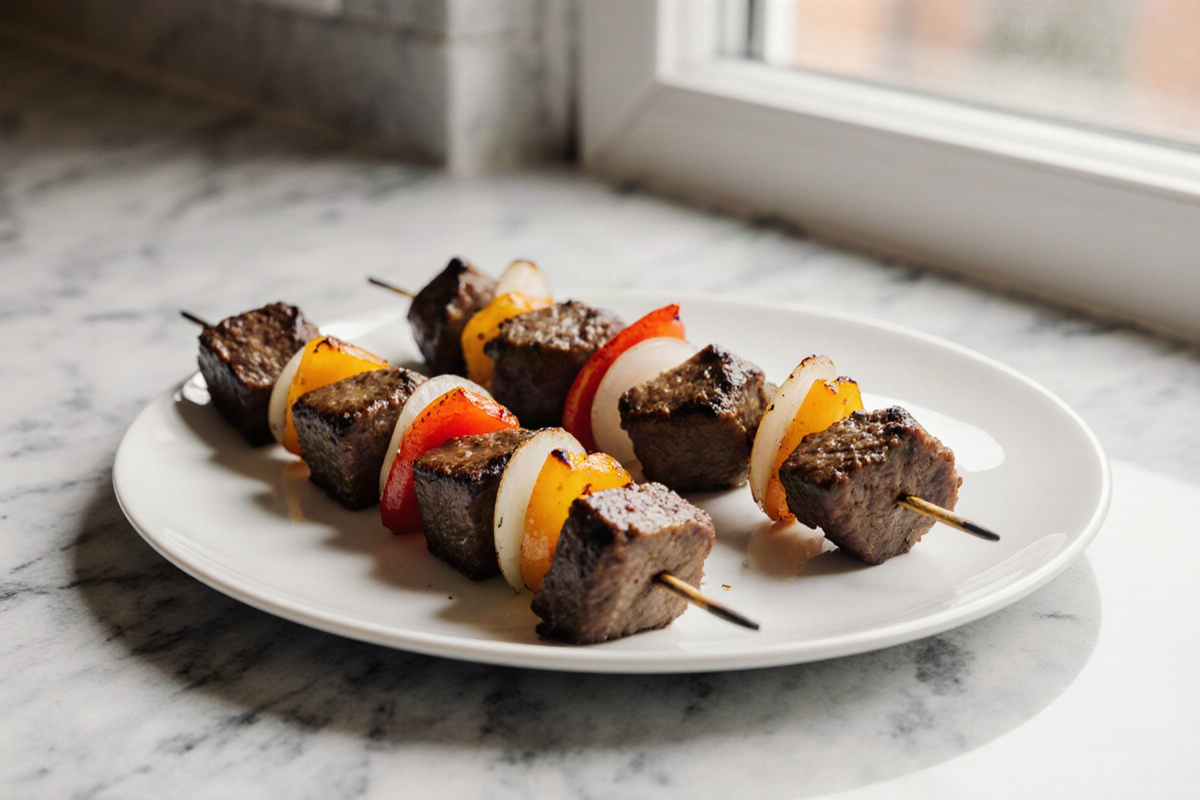
Classic Beef Kabobs used to be one of those dishes I only made on weekends because they felt like a hassle. But after fiddling around with different techniques, I’ve found a way to make them simple enough for any busy weeknight. The magic is in the marinating and the uniform cubes of meat that ensure even cooking. You’ll have tasty, juicy kabobs on the table in no time, and trust me, they’ll leave everyone asking for seconds. Give it a try, and I bet these will become a go-to in your dinner rotation too!
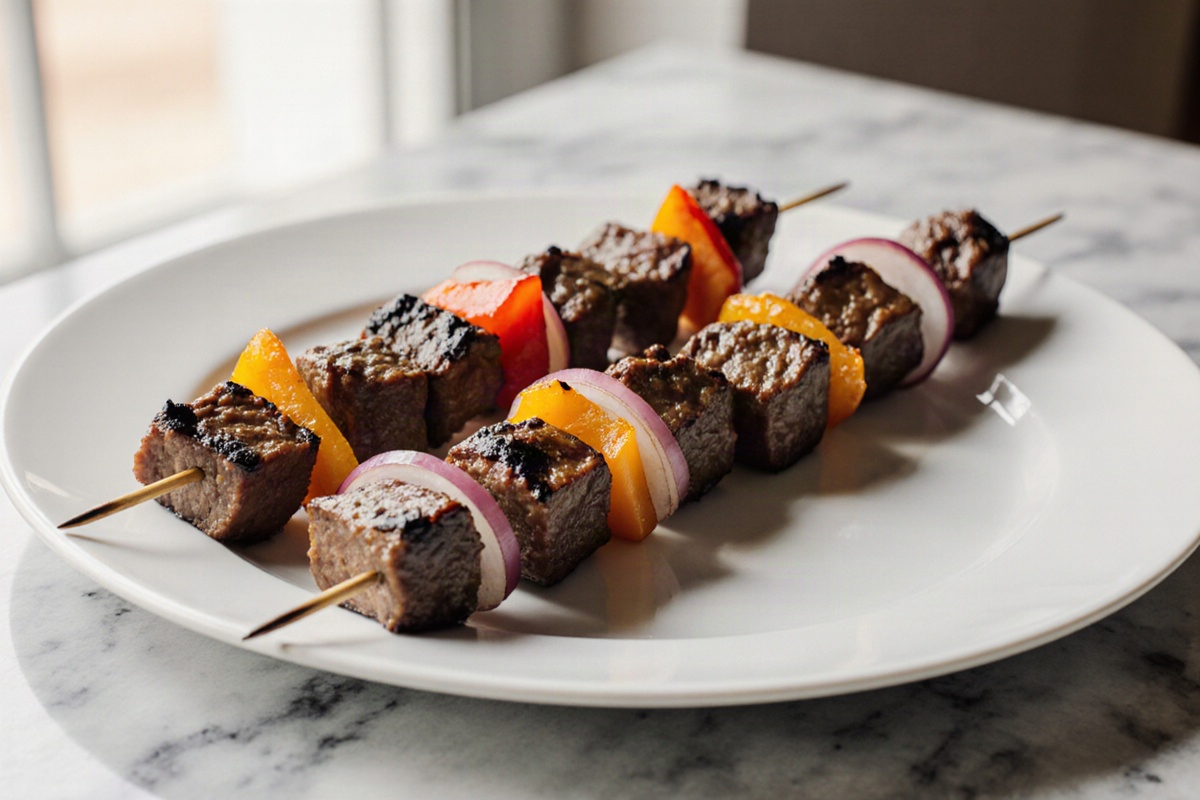
Recipe Card – Classic Beef Kabobs
Classic Beef Kabobs
Equipment
- Grill
- Skewers
Ingredients
Ingredients
- 500 g Beef (sirloin, ribeye, or tenderloin) cut into 2.5 cm cubes
- 100 g Bell peppers cut into pieces
- 100 g Onions cut into pieces
- 15 ml Olive oil for marinating
- 10 g Salt to taste
- 5 g Pepper to taste
Instructions
- Preheat your grill to high heat. If using wooden skewers, make sure to soak them in water for at least 30 minutes to prevent burning.
- In a bowl, combine the beef cubes, olive oil, salt, and pepper. Mix well and let marinate for at least 30 minutes.
- Thread the beef, bell peppers, and onions onto the skewers, alternating between each ingredient.
- Place the skewers on the grill and cook for about 8-12 minutes, turning occasionally, until the beef is cooked to your desired level of doneness.
- Remove from grill and let the kabobs rest for 3-5 minutes before serving.
Notes
Classic Beef Kabobs: An Introduction
Why This Recipe Works
Classic beef kabobs combine tender, bite-sized pieces of beef with vibrant vegetables on skewers, cooking them quickly over high heat to lock in juices and add a nice char. This technique is super flexible and friendly for home cooks, allowing you to adjust flavors with whatever you have in your pantry. The recipe really shines when you cut the beef into uniform cubes, which helps them cook evenly for dependable results. Trust me, using the same size pieces makes a world of difference, especially when you’re working with peppers, onions, or mushrooms alongside the beef. I’ve had my share of burnt batches, so I always opt for methods that keep the outside crispy while ensuring the inside stays juicy. A simple marinade or dry seasoning that’s spread evenly can let the beef soak in flavor without masking its natural taste. The secret is to cook them fast and hot, with balanced ingredients so each bite is bursting with flavor.
Best Beef Cuts for Kabobs
When making classic beef kabobs, you want cuts that balance tenderness with flavor.
- Sirloin, ribeye, and tenderloin are great picks because they remain tender when skewered and grilled for a short time.
- A bit of marbling, especially in ribeye, adds moisture and richness that can handle the quick sear.
- If you prefer lean cuts, sirloin offers a wonderful texture with careful cooking.
- For flank or skirt steak, remember to slice against the grain into bite-sized pieces to keep the meat tender.
Cut the beef into roughly 1-inch cubes for even cooking and easier skewering. Trim any excess fat to prevent flare-ups on the grill. Ultimately, the best beef kabobs come from cuts you love eating by themselves, cooked to tender perfection. A little advice from your butcher and consistent sizing will go a long way.
Classic Beef Kabobs Nutrition
Calories, Protein, Fat, and Carbs
A serving of classic beef kabobs with vegetables usually falls within a moderate calorie range, with roughly 300–350 calories per serving, depending on the cut and how much marinade or oil you use. You can expect around 28–32 g of protein to help with muscle repair and satisfaction, and fat content typically hovers around 12–18 g based on marbling and added oils. Carbs mainly come from the vegetables and any sugars in marinades, often landing in the 6–12 g range per serving. These numbers may vary with the exact beef cut, the volume of veggies, and how much oil or marinade you use. If you’re keeping an eye on calories, load up on peppers, onions, and mushrooms—they add bulk without many extra calories. Keep in mind, portion sizes and side dishes highly influence the overall nutrition of your meal.
Key Vitamins and Minerals
Beef kabobs offer iron and zinc from the beef, along with vitamin B12, which supports energy metabolism. The veggies, like bell peppers and onions, add vitamin C and fiber, plus a bit of vitamin A from those colorful peppers. Together, they help create a well-rounded meal full of antioxidants and essential nutrients for your health. If you want a colorful plate, mix in red, yellow, or orange peppers with onions or cherry tomatoes to boost those veggie-derived nutrients. A balanced skewer isn’t just about protein—it’s a range of vitamins and minerals working together.
Health Benefits and Considerations
Choosing leaner cuts of beef and trimming the fat helps keep saturated fat in check without losing flavor. Pairing beef with a generous helping of vegetables adds fiber and micronutrients, supporting digestion and a sense of fullness. Marinades with citrus or vinegar tenderize the meat and help reduce charring when cooked at high temperatures. Keep your portions reasonable and think of one skewer as a satisfying part of a larger meal. If you have specific dietary needs, like sodium restrictions, adjust your seasonings and marinades accordingly. Overall, classic beef kabobs are a delicious, high-protein option that can fit seamlessly into many healthy eating plans when balanced with vegetables.
Tips for the Best Kabobs
How to Keep Beef Tender
To keep the beef tender on skewers, begin with similarly sized cubes—about 1 inch (2.5 cm) works well for most setups. Marinate the beef for at least 30 minutes and up to 6 hours in a light acid-based mixture to help break down the fibers; just remember to refrigerate while marinating. When it’s time to cook, pat the pieces dry to encourage browning and avoid steaming. Don’t overload the skewers; give each piece enough space so heat can circulate. After cooking, let the kabobs rest for 3–5 minutes; this helps redistribute the juices. If you notice any toughness, consider marinating for a longer time next round or opting for a more tender cut. Making these small adjustments can improve tenderness without complicating the process.
How to Get Better Browning
Browning is all about controlling heat and moisture. Preheat your grill or pan to high and lightly oil the grate or pan to prevent sticking. Make sure the surfaces of your meat and vegetables are dry before skewering to achieve a nice, crisp exterior. Turn the skewers only as needed to prevent breaking pieces, and rotate to get an even color on all sides. A quick, intense sear followed by a short resting period helps build flavor without drying out the inside. If your non-stick surface isn’t cooperating, consider using metal skewers or soaking wooden skewers in water first to avoid burning. Remember: a good brown adds flavor; a great brown gives you flavor with a wonderful caramelized crust.
Common Mistakes to Avoid
Some common slip-ups include overcrowding the skewers, which leads to steaming and soggy results, and skimping on the seasoning, which results in flat flavors. Another mistake is cooking too long over low heat, leading to dried beef; aim for high heat and a short cooking time for the best results. If you skip patting the meat dry before skewering, it could hinder browning, so take a moment to remove any extra moisture. Lastly, avoid cutting inconsistent pieces; uniform sizes ensure even cooking. If you find some pieces are drying out, consider using cuts with slightly more fat or reduce the cooking time next time. With a few mindful changes, you’ll consistently get juicy, well-browned kabobs.
Flavor Variations and Serving Ideas
Regional Variations
Regional takes on classic beef kabobs are all about different seasonings and flavors. For a Mediterranean twist, try adding oregano, garlic, lemon zest, and a dash of olive oil for brightness. A Middle Eastern option might use cumin, coriander, and a pinch of sumac for a tangy spin. To give it a Latin flair, sprinkle in chili powder, paprika, lime juice, and cilantro for a fresh kick. The Greek method often relies on oregano, garlic, and lemon juice; this mix of herbs and citrus creates a lively, bright finish. Each variation still focuses on tender beef and crispy vegetables, but the flavor experience changes with different spice blends and acidity. Feel free to experiment with herbs to find your favorite.
International Flavor Twists
Think outside the box with glaze options and soy-based marinades. A sweet-savory glaze made of honey, soy, and ginger adds a glossy finish with Indonesian or Thai-inspired vibes. A smoky blend of paprika and cumin creates Mexican street-food flavors, especially when paired with cilantro and lime. For a North African twist, throw in preserved lemon, paprika, and cinnamon for an exotic lift. No matter what route you take, pair your skewers with sides that complement bold flavors. The aim is to keep the beef’s natural character while adding global touches that match your taste.
Best Side Dishes
Great sides can transform beef kabobs into a full meal. A bright herbed rice or quinoa pairs beautifully with the rich beef. Serve it with warm pita or flatbread, plus a cool yogurt sauce or tzatziki to contrast the sear. Grilled vegetables—like zucchini, bell peppers, and cherry tomatoes—add color and fiber. A simple starter salad with citrus vinaigrette brings refreshing balance. For something more filling, consider a cucumber-tomato salad or a light chickpea salad on the side. Finding the right balance of protein, veggies, and a starch or bread to soak up any extra marinade is key.
Video: BEEF SHISH KABOBS (with the best marinade) for the …
FAQ – Classic Beef Kabobs
Best Cut of Beef for Kabobs
For reliable tenderness and flavor, choose sirloin, ribeye, or tenderloin. Sirloin offers lean protein with good texture, while ribeye brings marbling for juiciness. Tenderloin delivers ultra-tender bites but is usually pricier. If you’re using flank or skirt, slice against the grain into 1-inch cubes and consider a longer marinating time to maximize tenderness. Each cut can work well with the right cooking method and careful attention to doneness.
Cooking Time in the Air Fryer
In an air fryer, beef kabobs cook quickly at high heat. A practical starting point is about 6–12 minutes at 400°F (204°C), turning halfway for even browning. Actual time depends on cube size, exact beef cut, and your air fryer model. Aim for an internal temperature of 135–145°F (57–63°C) for medium-rare to medium, then rest briefly. If you like your beef more done, add a couple of minutes, but avoid overcooking to keep things juicy. Always monitor the first batch to calibrate time with your setup.
Overnight Marinating Benefits
Marinating overnight can deepen flavor and improve tenderness, especially with tougher cuts or lean beef. Keep the beef refrigerated in your marinade, and be mindful of salt levels in marinades—too much salt can draw moisture out of the meat. A longer marinate should still be balanced with fresh aromatics to avoid overpowering the beef’s natural taste. If you’re short on time, even 30 minutes of marinating can make a noticeable difference. Always pat dry before skewering to promote browning.
Soaking Wooden Skewers
Soaking wooden skewers for 30 minutes to 1 hour before use helps prevent them from scorching on a hot grill or in an oven. If you’re pressed for time, using metal skewers eliminates this step entirely. When you soak, ensure they’re fully submerged and submerged evenly so they won’t catch fire during cooking. Dry skewers can also help keep the surface of the beef dry for better browning. Safety matters, and this simple step pays off with a cleaner finish.
Cooking Without an Air Fryer
If you’re not using an air fryer, you can still enjoy excellent beef kabobs by grilling, broiling, or searing on a grill pan. Preheat to a high heat and oil the grates lightly. Skewer the beef and vegetables, then cook 2–3 minutes per side for a quick sear, rotating as needed. Move to a cooler part of the grill if flare-ups occur, and cook until the internal temperature reaches your desired doneness. Resting briefly after cooking helps juices redistribute. The same principles apply: uniform pieces, even exposure to heat, and careful timing.
How to Avoid Dry Kabobs
Dry kabobs usually come from overcooking or under-seasoning. Ensure even cube sizes and avoid crowding the skewers. Marinate or brush with a light oil to shield meat from direct heat, and monitor doneness with a quick test to reach your preferred level of pink. Rest the skewers after cooking to let juices settle. If moisture seems low, consider a short finishing step with a quick kiss of heat to re-brown and re-crisp the exterior.
Tips for Better Browning
A good sear is built on dry surfaces, hot heat, and a touch of oil. Ensure skewers and meat are dry before cooking, preheat your grill or pan, and use a light coating of oil or fat on the surface. Don’t crowd the pan; give each piece space to develop browning. Rotate frequently for consistent color, and finish with a brief rest. If you’re worried about sticking, choose metal skewers or soak wooden ones thoroughly. Browning is flavor; make it intentional and even.
Conclusion
When you pull the kabobs off the grill, you’ll be greeted by that mouthwatering aroma of charred beef and fresh veggies. Each skewer is a perfect blend of juicy meat and vibrant peppers, all kissed by the grill’s flame. They not only look fantastic on the plate but taste even better. You can do this, and I encourage you to give it a try. You’ll find it’s a satisfying, crowd-pleasing dish that brings everyone together on busy nights and slow weekends alike.