
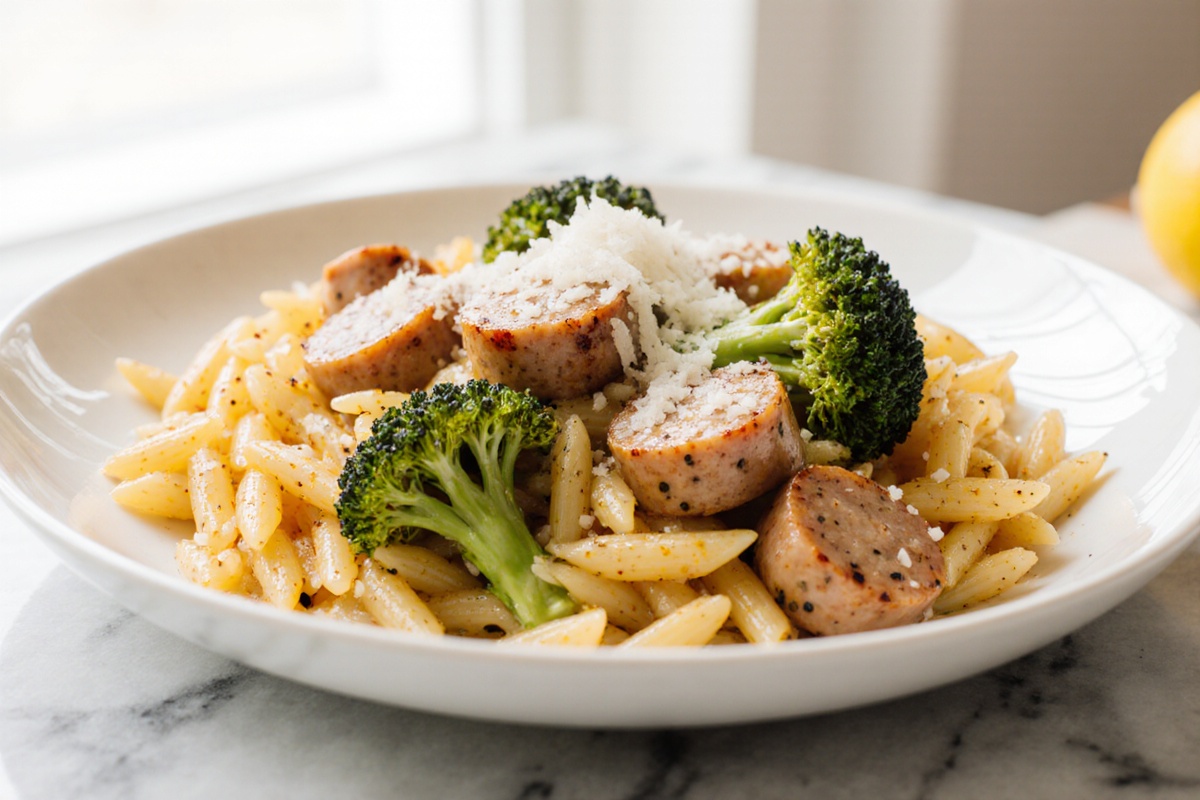
Chicken Sausage and Broccoli Orzo used to be one of those meals I avoided on busy nights because it felt complicated. But once I figured out this straightforward method, it became a go-to dish filled with flavor and nutrition. In just about 30 minutes, you’ll have a wholesome one-pan meal that’s not only delicious but also keeps cleanup to a minimum. If you’ve ever found yourself staring at a pile of pots and pans after cooking, you’ll love the simplicity of this recipe. Trust me, once you try this, it’ll be a weeknight staple in your house.

Recipe Card – Chicken Sausage and Broccoli Orzo
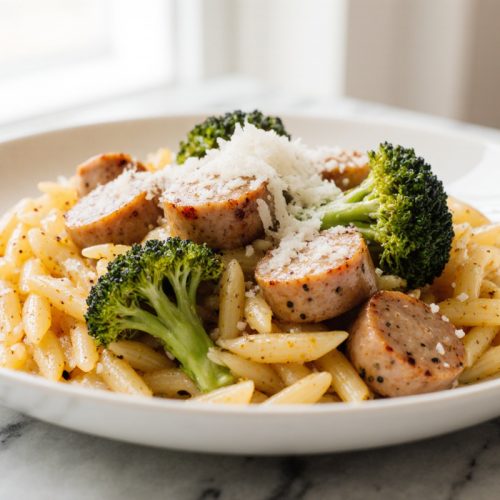
Chicken Sausage and Broccoli Orzo
Equipment
- Large Skillet
Ingredients
Ingredients
- 300 g Chicken sausage sliced
- 200 g Orzo dry
- 200 g Broccoli fresh florets
- 1 clove Garlic minced
- 30 ml Chicken broth or vegetable broth
- 1 unit Lemon for juice
- 30 g Parmesan cheese optional, grated
Instructions
- Heat a wide, heavy skillet and add the chicken sausage to render some fat and brown it for extra flavor.
- Once it's nicely browned, stir in the broccoli so it becomes vibrant and tender-crisp.
- Add the dry orzo and enough broth to cook until the pasta is tender and the broccoli is cooked to your liking.
- Stir frequently and season as you go, finishing with a squeeze of lemon and an optional dusting of cheese.
Notes
More Favorites from My Kitchen:
Spicy Salmon Sushi Bake Recipe
Beef Tenderloin with Creamy Peppercon Sauce Recipe
Or go to my Pinterest.
Why This One-Pan Meal Is Perfect
Full nutrition in 30 minutes
This Chicken Sausage and Broccoli Orzo comes together in one skillet, giving you protein, veggies, and carbs in a bright, satisfying dish. In about 30 minutes, you’ll have a balanced meal that features protein from the sausage, fiber from the broccoli, and energy from the orzo. It’s the kind of recipe I reach for when I want great flavor without a mountain of dishes. The focus is on practical, delicious nutrition that works on those busy nights. I’ve relied on this method countless times for weeknight dinners and casual gatherings, and it never lets me down. Trust me, this simple step makes weeknights both easy and tasty.
Minimal cleanup required
The best part about a one-pan meal is how little cleanup it requires—just straightforward and quick. Once you finish cooking, you’ll likely just need to wipe the pan or give it a quick rinse, depending on the surface. This means you get to spend more time enjoying your meal and less time stuck at the sink. It’s especially helpful when you’re feeding a hungry crowd or just cooking for yourself after a long day. If you’ve ever felt overwhelmed by dishes, this trick is a small but mighty win. A tidy kitchen keeps the focus on savoring the flavors you’ve just created.
Customizable for dietary preferences
This recipe is friendly to a variety of dietary needs. Feel free to swap in plant-based sausage for a vegetarian option or use a gluten-free orzo for those who need it. You can also tweak the dairy—leave cheese out for a dairy-free version or sprinkle on some parmesan if you enjoy a sharper finish. For lower-sodium diets, pick sausages labeled as reduced-sodium and use a light broth. The core technique stays the same, so you can adjust the flavors while keeping this beloved one-pan method. It’s a flexible foundation you can count on again and again.
Nutrition Breakdown of Chicken Sausage Orzo
Macronutrient profile and calorie content
This dish brings together protein, carbohydrates, and fats into a delicious meal. The chicken sausage gives you protein and fat, while the orzo provides carbohydrates for energy, and broccoli adds fiber and vitamins. The overall balance depends on portions and ingredient choices, but you’re aiming for a plate where plenty of protein sits alongside a generous helping of veggies and a modest amount of starch. If you’re counting calories, remember that brands vary, so use general guidelines to estimate based on your specific ingredients. The key is to appreciate how the components work together to keep you full and satisfied. It’s a comforting, practical choice when you seek nutrition without fuss.
Key vitamins and minerals
Broccoli truly shines when it comes to micronutrients, offering vitamin C, vitamin K, and a healthy dose of fiber. The orzo contributes B vitamins that support energy metabolism, while the whole-meat sausage provides iron and zinc to help meet daily nutrition goals. Together, these ingredients create a colorful plate that covers essential nutrients without needing a bunch of separate side dishes. If you’re cooking for kids or picky eaters, familiar flavors can boost vegetable consumption without a struggle. Nutrition doesn’t have to be complicated when the ingredients shine.
Protein comparison: orzo vs. rice
Orzo, being wheat-based, usually has a bit more protein than white rice per serving. This means you’ll get a sturdier protein boost from the pasta component in this dish. When you pair it with chicken sausage, the overall meal leans towards a more rounded protein profile than a rice-based alternative. It’s a simple way to enhance satiety and support muscle maintenance, especially on busy days when you need steady energy. If you’re choosing between grains, this is a solid, tasty option that keeps things playful and familiar.
How to Make Chicken Sausage and Broccoli Orzo
Ingredient selection tips
Pick chicken sausage with a flavor that excites you, whether it’s garlic, herb, or something spicy. Fresh broccoli florets should be bright green and firm; avoid any that feel overly soft. Orzo should be dry and uncooked, ready to soak up delicious flavors as it cooks. A handful of pantry staples—garlic, lemon zest, and parmesan—can elevate the dish without complicating things. If you want some extra color and texture, keep a little chopped parsley or basil to fold in at the end. The key is to use ingredients you enjoy together, since the simplicity relies on high-quality, fresh flavors. I’ve found that a good selection makes every slice and bite sing.
Step-by-step cooking instructions
Start by heating a wide, heavy skillet and adding the sausage to render some fat and brown it for extra flavor. Once it’s nicely browned, stir in the broccoli so it becomes vibrant and tender-crisp. Toss in the dry orzo with enough liquid to cook until the pasta is tender and the broccoli is cooked the way you like. Stir frequently and season as you go, finishing with a quick squeeze of lemon and an optional dusting of cheese if you’d like. This method keeps the dish cohesive and ensures the components combine beautifully. Remember, the goal is a bright, balanced bite with the sausage’s savoriness, the broccoli’s freshness, and the pasta’s comforting texture. It pairs wonderfully with a side salad or warm bread for a complete meal.
Common mistakes and how to avoid them
Common slip-ups include overcooking the broccoli and turning it mushy, which can happen if you add it too early. To prevent this, give the broccoli a head start and keep an eye on its texture as the orzo cooks. Another pitfall is letting the orzo soak up all the liquid before it’s tender; watch the simmer and add a splash more broth if needed. Don’t skip browning the sausage; that caramelization elevates the dish from bland to flavorful. If the dish tastes flat, a quick splash of lemon juice or a small handful of grated cheese can restore brightness. With these simple checks, you’ll avoid common mistakes and end up with delightful, satisfying flavors.
Creative Variations to Keep Meals Interesting
Flavor-based swaps
Fresh herbs like basil, oregano, or thyme can shift the flavor profile dramatically. Try adding lemon zest for brightness or a pinch of red pepper flakes for a gentle kick. If you love garlic, a little extra minced garlic at the start can deepen the savory notes. You can also experiment with smoked paprika or cumin for a warm, earthy touch. These swaps keep the dish exciting while keeping its simple, weeknight-friendly charm. I’ve used these ideas on repeat and have loved the different personalities they bring to the same basic recipe.
Sausage alternatives
If you want to lighten things up, turkey sausage or plant-based sausage options work perfectly. For a different flavor, Italian sausage (pork) can add a classic Italian vibe with richer fat content. If you need a completely dairy-free version, skip the cheese and rely on lemon and herbs for finishing touches. The basic technique stays the same, so you can switch proteins without changing cooking methods. These substitutions open up the recipe to a wider range of tastes and dietary needs while keeping the familiar textures and balance intact.
Vegetable additions
While broccoli is great, feel free to mix in peppers, spinach, or mushrooms for extra color and nutrition. Peas or asparagus add a sweet touch, while kale or chard can take the place of more greens. Add delicate veggies toward the end of cooking so they keep their texture and brightness. These additions create a customized plate with a garden-fresh feel, allowing you to tailor the dish to whatever you have on hand or what’s in season. It’s a flexible canvas for your creativity.
International-inspired versions
Brighten the dish with a Mediterranean flair by finishing with olives, feta, and a drizzle of olive oil. A Thai-inspired version could feature lime juice, cilantro, and a hint of toasted sesame oil for an umami boost. For a Mexican twist, add cilantro, lime, and a sprinkle of chili powder. These international twists keep the core one-pan approach while introducing vibrant flavors from around the globe. The result is a family-friendly meal that’s full of personality, perfect for weeknights or potlucks.
Video: Orzo With Broccoli & Chicken Recipe
FAQ – Chicken Sausage and Broccoli Orzo
Make-ahead and storage tips
Leftovers refrigerate well in an airtight container for up to 3–4 days. Reheat gently on the stove or in the microwave, adding a splash of broth if the mixture looks dry. If you plan to meal-prep, consider cooking the orzo until just shy of al dente, then finishing in the pan with reheated broccoli and sausage when you’re ready to serve. Avoid freezing cooked pasta with broccoli for best texture; it can become a bit soft upon thawing. With proper storage, you can enjoy this dish across several meals with minimal fuss.
Substitution options
If you don’t have broccoli, try green beans, asparagus tips, or spinach for color and nutrition. Swap in gluten-free orzo if needed, or substitute with quinoa for a more grain-forward option. For dairy-free diets, omit cheese or use a dairy-free alternative. If you’re reducing fat, choose lean sausage varieties and limit added fats in the pan. The substitutions are designed to keep the same structure and flavor balance, so you don’t lose the essence of the dish when adjusting to what you have on hand.
Dietary modifications
Gluten-free: use certified gluten-free orzo and verify sausage ingredients for gluten. Dairy-free: skip cheese or use a dairy-free cheese alternative. Lower sodium: select reduced-sodium sausage and broth, and season gradually to avoid oversalting. Vegetarian: switch to plant-based sausage and, if desired, a dairy-free cheese substitute. This recipe adapts to many dietary goals without sacrificing the cozy, satisfying feel of a one-pan meal. If you’re navigating dietary needs, start with one modification at a time and adjust to taste as you go.
Conclusion
When you’re done, your Chicken Sausage and Broccoli Orzo will look vibrant and inviting, with the broccoli a bright green and the sausage perfectly browned. The aroma? Simply delicious, with a hint of garlic and lemon wafting through the kitchen. Each bite is a delightful combination of juicy sausage, tender pasta, and fresh greens that bring comfort and satisfaction. You’ll feel accomplished and ready to dig in! Give it a try – you might be surprised how simple and satisfying this recipe can be on a busy weeknight.