
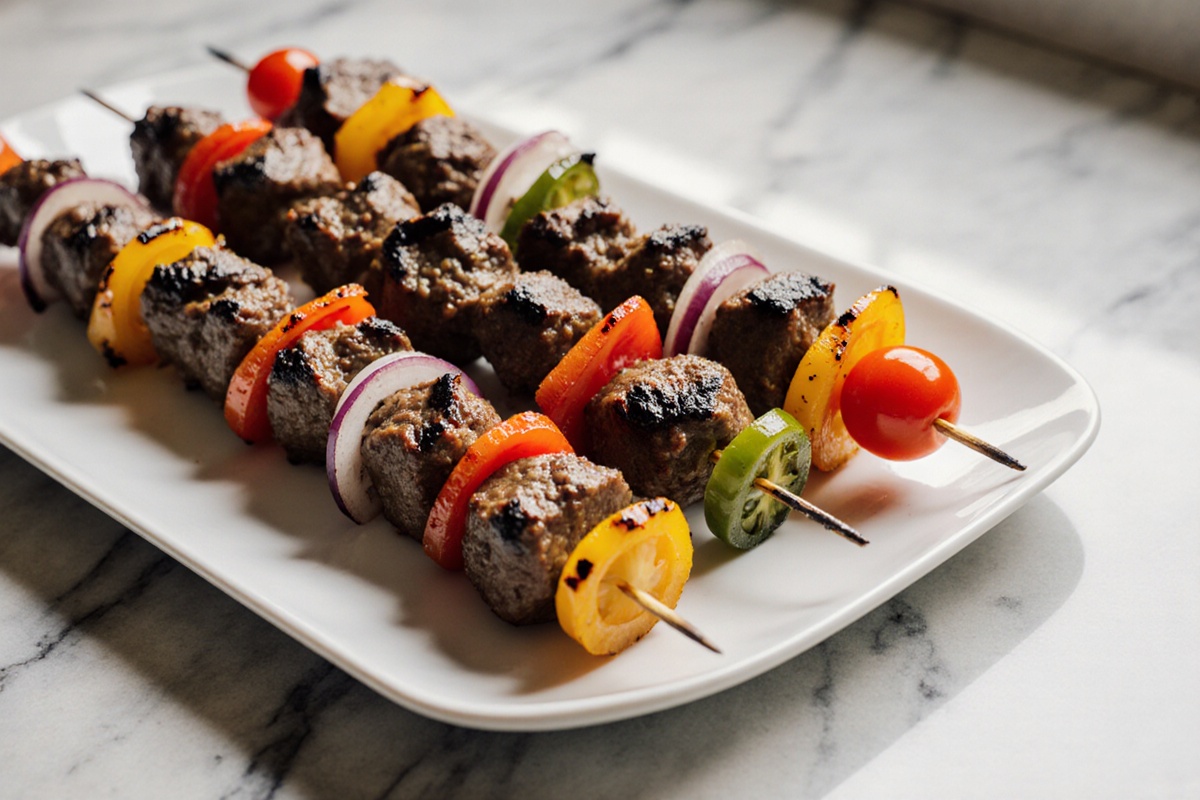
Classic Beef Kabobs used to feel a bit intimidating to me, but once I figured out a no-fuss method, it became a staple in my weeknight lineup. I was pleasantly surprised at how simple it was to achieve tender, juicy bites without a lot of hassle. The best part? You can whip them up in the oven, on the grill, or in an air fryer, making it a versatile option. Trust me, once you see how easy it is to marinate the beef and toss everything on skewers, these kabobs will be making regular appearances on your dinner table, too.
Recipe Card – Classic Beef Kabobs
Classic Beef Kabobs
Equipment
- Air Fryer
- Skewers
- Mixing Bowl
- Grill (optional)
Ingredients
Ingredients
- 500 g Beef tender cut, cut into 1.5 cm to 2 cm cubes
- 200 g Bell peppers cut into chunks
- 100 g Red onions cut into chunks
- 150 g Mushrooms whole or halved
- 100 g Cherry tomatoes whole
- 15 ml Olive oil for marinade and brushing
- 2 clove Garlic minced
- 30 ml Citrus juice or vinegar for marinade
- 5 g Salt to taste
- 5 g Pepper to taste
- 10 g Herbs for marinade, optional
Instructions
- Mix the marinade ingredients in a bowl: olive oil, garlic, citrus juice or vinegar, salt, pepper, and herbs.
- Toss the beef cubes in the marinade to coat and let them marinate for at least 30 minutes to 2 hours.
- Thread the marinated beef and veggies onto skewers, leaving a little space between each for even cooking.
- Preheat your air fryer to 200 °C (392 °F) and lightly brush the basket with oil.
- Arrange the skewers in the air fryer basket in a single layer and cook for 8–12 minutes, turning halfway.
- Check for doneness: internal temperature should be at least 63 °C for medium-rare, letting them rest for 3–5 minutes before serving.
Notes
Making Classic Beef Kabobs Delicious
Best cuts of beef for kabobs
When I make beef kabobs, I always start with tender cuts that have a nice amount of marbling. Cutting them into uniform cubes helps everything cook evenly. For home cooks, I recommend choosing cuts that balance tenderness and flavor while trimming any excess fat—this helps prevent flare-ups on the grill or in the air fryer. I’ve found that keeping the cube size consistent, around 1.5 cm to 2 cm, makes a big difference in achieving that perfect browning and juicy bite. So, whether you go for sirloin, ribeye, or tenderloin, make sure to leave a little space between the pieces on the skewer to let the heat circulate. Trust me, this step is key for a great texture.
Classic vegetables and marinade flavors
Beef kabobs look best when you pair the meat with colorful veggies that can stand up to high heat. I usually use bell peppers, red onions, mushrooms, and cherry tomatoes or zucchini. For the marinade, I whip up a simple mix of olive oil, garlic, citrus juice or vinegar, salt, and herbs. This combo adds brightness and helps everything come together beautifully. Balancing richness with acidity tenderizes the meat and keeps the flavors friendly for everyday meals. If you’ve ever burned a batch, you’ll know how a fresh marinade can prevent scorching while encouraging that delicious caramelization.
Why this recipe works for U.S. home cooks
My approach here is perfect for the equipment and timing most of us have at home. You can grill over charcoal or gas, bake in the oven, or even cook in an air fryer—all pretty common in American kitchens. Finding the ingredients is a piece of cake at your local grocery store, and you can scale the method from a quick weeknight meal to a fun weekend cookout. With a quick marinade and even heat, you’ll have tasty kabobs ready to serve with hardly any fuss, making Classic Beef Kabobs a favorite choice.
Classic Beef Kabobs Nutrition
Calories, protein, fat, and carbs
The nutrition in beef kabobs varies depending on the cut size, marinade, and veggie mix. But expect a hearty serving packed with protein while keeping fat and carbs in check. You’ll get a nice protein boost from the beef, and the fat contributes to juiciness based on the cut you choose. Carbs mainly come from the vegetables and any sugars in the marinades. If you’re watching portions, balancing your plate with extra veggies can help you meet your daily nutrition goals. Keep in mind, portion size and the choice of cut significantly influence the final numbers.
Key vitamins and minerals
Beef is a great source of iron and zinc, while peppers, onions, and tomatoes provide vitamin C, potassium, and various antioxidants. Together, they create a well-rounded nutritional profile: protein-rich beef supports muscle maintenance, and colorful veggies bring fiber and micronutrients to the table. Just remember, marinades can add sodium or sugars, so tasting as you mix helps keep everything flavorful without sacrificing nutrition.
Health benefits and drawbacks
Classic beef kabobs offer high-quality protein and iron, both of which support energy and a healthy immune system. Moderate portions paired with plenty of veggies boost overall health. However, keep an eye on sodium levels in your marinades and think about choosing leaner cuts to limit saturated fat. If you enjoy beef regularly, pairing kabobs with a big portion of veggies can help keep your meal on the lighter side.
How to Make Beef Kabobs in the Air Fryer
Ingredients you need
You’ll want beef cubes (1.5 cm to 2 cm) from a tender cut, plus chunks of veggies like bell peppers and onions. Have a light oil on hand for coating and a simple seasoning blend of salt, pepper, garlic, and herbs. Optional ingredients for your marinade might include lemon juice, soy sauce, or a splash of olive oil. Don’t forget to prepare metal or soaked wooden skewers, and a little oil to help with browning. The air fryer makes it easy to finish with a nice sizzle, creating less smoke and fuss.
Marinade and prep steps
First, mix your marinade ingredients in a bowl, and toss the beef cubes in to coat them well. Let them marinate for at least 30 minutes to 2 hours for the best flavor and tenderness, turning once if you can. Thread the beef and veggies onto skewers, leaving a bit of space between them for heat circulation. Preheat your air fryer to about 200 °C (392 °F) or whatever setting is recommended, lightly brush the basket with oil, and arrange the skewers in a single layer, leaving space between each. Cooking them this way allows for faster cooking and more even browning.
Air fryer temperature, timing, and doneness
Cook your kabobs at around 200 °C (392 °F) for about 8–12 minutes, turning them halfway for even color. For doneness, aim for an internal temperature of 135 °F (57 °C) for medium-rare to medium, then let the skewers rest for 3–5 minutes before serving. If you like your beef well-done, aim for around 160 °F (71 °C), but keep an eye on it to avoid drying out the meat. Resting helps the juices redistribute, so every bite stays juicy.
Common Mistakes and How to Fix Them
Why kabobs turn out dry
Dry beef usually happens from overcooking or starting with too lean of a cut. It can also occur if you crowd the skewers or don’t marinate them long enough. To fix this, choose a cut with some marbling, give enough rest time between batches, and stick to the recommended cooking time. A bit of fat helps retain moisture and adds flavor, so don’t trim off every bit of richness.
How to prevent uneven cooking
Getting uniform cubes and spacing them evenly on the skewers makes a huge difference. Alternate meat with veggies for balanced cooking, and avoid overlapping pieces. If some pieces cook faster, try moving the skewers to a higher rack or rotating them more often. Keeping space between each piece allows heat to penetrate evenly, which prevents raw centers or burnt edges.
How to get better browning
To achieve a richer crust, pat the meat dry before seasoning and add a bit of oil to help with browning. Preheat your cooking surface well, and avoid cramming the air fryer basket or grill grate. A quick blast of higher heat at the beginning can help start the browning, followed by steady cooking until the centers are done. Remember to flip the kabobs for an evenly caramelized exterior on all sides.
Beef Kabob Variations and Serving Ideas
Regional flavor twists
Explore flavors from around the globe by swapping in different spice blends. A Mediterranean version might feature lemon, oregano, and garlic; a Middle Eastern option could include cumin, coriander, and paprika; and a Southeast Asian twist could use soy, ginger, and a touch of honey. Simple citrus or herb infusions let you personalize the flavor without complicating things.
International versions
Try yukihira-style skewers with soy and sesame, Greek-inspired kabobs with oregano and feta, or South American chimmeras with chimichurri and grilled corn. Each version focuses on quick cooking over high heat and bold, complementary vegetables. Stick with the same basic technique and swap in regional seasonings to bring some adventure into your kitchen.
Best side dishes and sauces
Pair your kabobs with a fresh cucumber-yogurt sauce or tzatziki, a zesty chimichurri, or a tangy garlic yogurt dip. Serve alongside warm flatbreads, rice, or a light grain salad. A simple green salad adds a refreshing touch to balance the richness of the beef. A squeeze of lemon over the hot skewers brightens the flavors and keeps the meal feeling vibrant.
FAQ – Classic Beef Kabobs
Best cut of beef for kabobs
Choose tender, well-marbled cuts that hold together when skewered and grilled. Sirloin, ribeye, or tenderloin are popular options for juicy, flavorful bites. Slice into uniform cubes to promote even cooking and avoid chewy edges.
Marinating time for beef kabobs
Marinate for at least 30 minutes to maximize flavor, up to 4 hours for deeper tenderness. If you’re using an acidic marinade (citrus or vinegar), don’t go longer than 4 hours to prevent the meat from breaking down too much. Refrigerate while marinating and pat dry before threading.
Air frying beef kabobs
Preheat to about 200 °C (392 °F), arrange skewers in a single layer with space between pieces, and cook for 8–12 minutes, turning once. Check for an internal temperature of at least 145 °F (63 °C) with a brief rest of 3–5 minutes. Adjust time slightly for thicker pieces.
Keeping kabobs moist
Moisture comes from a balance of cut choice, proper marination, and careful cooking. Don’t overcook; use a marinade with a touch of oil and acid; rest the skewers after cooking to let juices redistribute. If the surface looks dry, a light brush of olive oil or the marinade’s remaining liquid can help.
Cooking vegetables with beef
Cut vegetables to roughly match the beef cubes for even cooking. Hardier veggies like peppers and onions hold up to heat, while mushrooms and tomatoes brown nicely without getting mushy. If some pieces are slower to cook, stagger their addition or par-cook them briefly before threading.
Soaking wooden skewers
Soak wooden skewers for at least 20–30 minutes before using to prevent burning in the air fryer or on the grill. Keep them submerged and away from direct flame if you’re cooking outdoors. If you forget, metal skewers are a reliable alternative that ensure consistent heat conduction.
Recommended internal temperature
Cook beef to a safe internal temperature of at least 145 °F (63 °C) and allow a rest of 3–5 minutes. For those who prefer a bit more doneness, you can go up to around 160 °F (71 °C), but that can make the meat firmer and less juicy. Resting is essential, as it redistributes juices for a tastier bite.
Conclusion
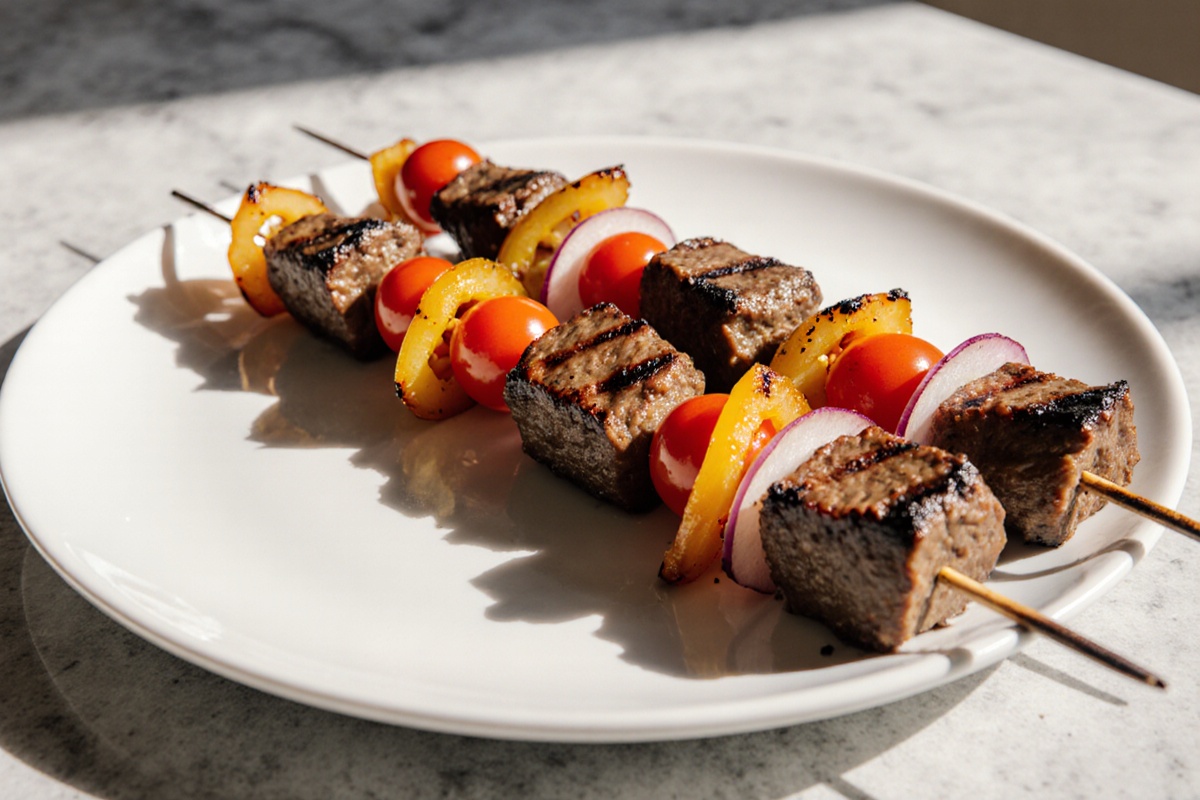
When you pull those kabobs off the heat, they look irresistible, with a beautiful char and vibrant veggies. The aroma alone is enough to make your mouth water, and the first bite? Pure bliss — juicy beef that melts in your mouth, perfectly balanced with the crunch of fresh vegetables. It’s quick, satisfying, and surprisingly easy. Give it a try – you might be surprised how simple and satisfying this recipe can be on a busy weeknight.