
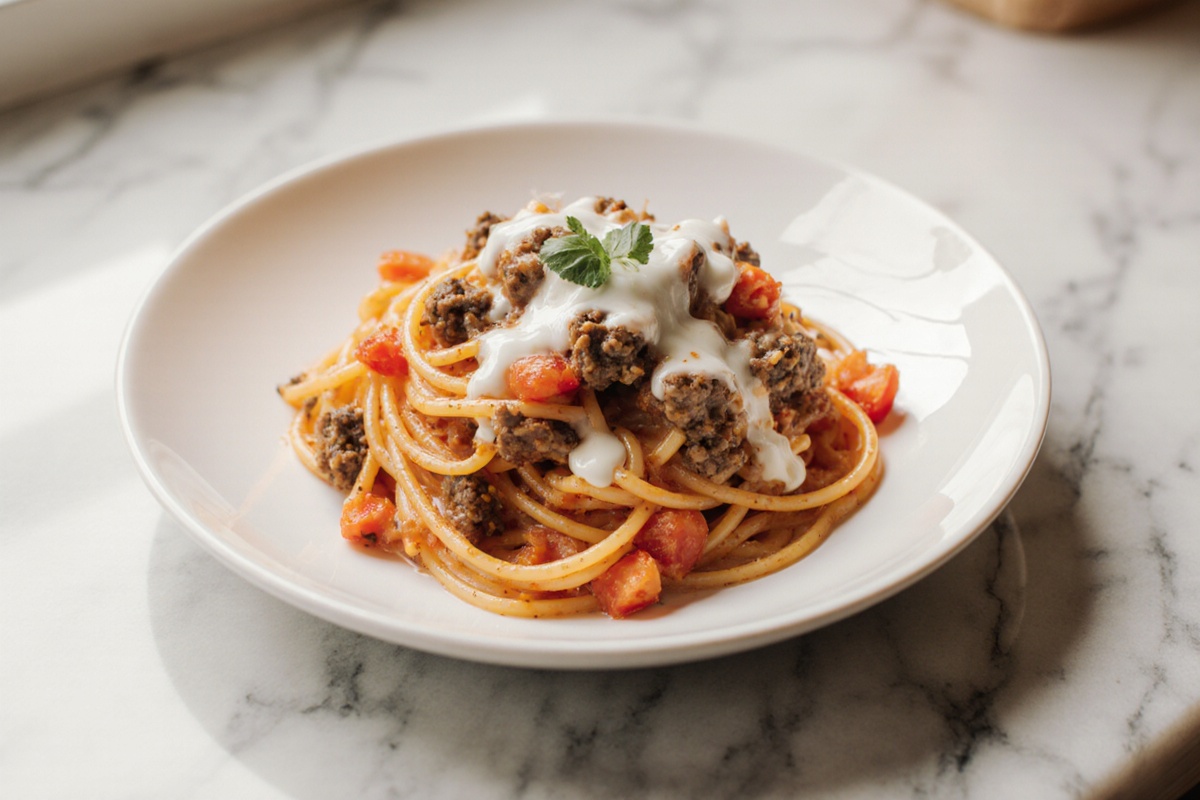
One pot creamy tomato beef pasta used to intimidate me at first because it seemed like a lot of steps for a busy weeknight. But trust me when I say, I’ve finally nailed it down to a quick and satisfying dish that comes together in about 30 minutes. This recipe is all about keeping it simple and delicious, with minimal cleanup, and allows you to create a rich, comforting meal that’s perfect for the whole family. If you follow my method, I promise it’ll become a reliable go-to, and you’ll wonder why you ever hesitated to try it on a hectic night!
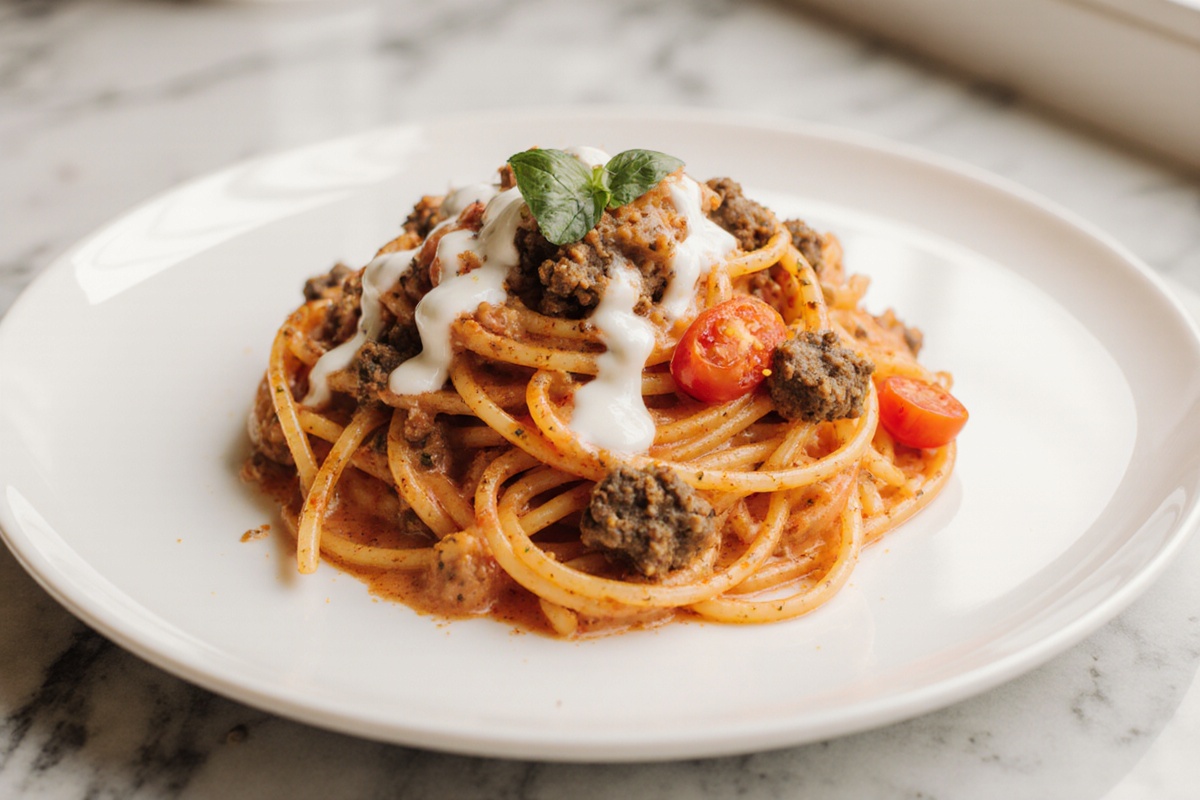
Recipe Card – One pot creamy tomato beef pasta
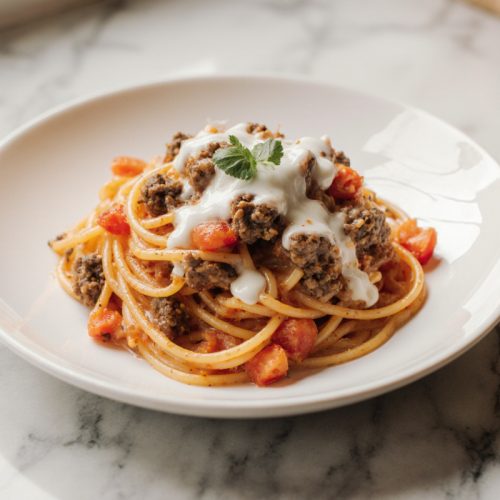
One Pot Creamy Tomato Beef Pasta
Equipment
- Sturdy pot
Ingredients
Ingredients
- 400 g Ground beef browned
- 400 g Crushed tomatoes
- 200 ml Cream
- 250 g Pasta short, sturdy type
- 15 ml Olive oil for cooking
- 1 tsp Salt to taste
- 1 tsp Black pepper to taste
Instructions
- Start by heating your sturdy pot over medium heat and browning the beef until it’s well-seasoned and just cooked through.
- Don’t rush the browning—the tasty bits left at the bottom are key for flavor, so deglaze with a bit of liquid.
- Then add in crushed tomatoes and seasoning to create a tangy base. Let simmer to meld flavors.
- Stir in the cream toward the end for a rich finish, then toss the pasta right into the pot.
- Add enough liquid to let the pasta finish cooking in the sauce, stirring as needed so nothing sticks.
- When the pasta is al dente and the sauce coats each strand, taste and adjust salt and pepper.
Notes
Craving More? Try These Recipes Next!
Braised Short Ribs with Garlic Mash recipe
Beef Tenderloin with Creamy Peppercon Sauce Recipe
Or go to my Pinterest.
Why This One Pot Creamy Tomato Beef Pasta is Your New Weeknight Go-To
The comfort food that takes 30 minutes
This One Pot Creamy Tomato Beef Pasta is the type of meal that makes busy evenings feel manageable and comforting at the same time. It comes together in about 30 minutes, so you can have a cozy, crowd-pleasing dinner without spending forever in the kitchen. The trick is in the flow: brown the beef in a good pot, loosen the tasty bits, then simmer with tomatoes and a splash of cream to create a rich sauce. Finish by mixing in the pasta to let it cook right in the sauce, soaking up all that flavor. I’ve definitely burned a batch or two in my early days—trust me, following this step-by-step method makes all the difference for a creamy, cozy dish.
This recipe relies on classic pantry staples, so you can use what you have without any stress. The end result is a comforting, hearty meal that feels special, even on a hectic weeknight. Keep the sauce simmering gently and resist the urge to rush; the magic happens when the flavors blend together. And let’s be honest, the aroma is enough to convince your family that dinner is going to be great.
Remember, the goal is to keep this a one-pot meal. Not only does that save you time, but it also means less scrubbing and more time enjoying dinner. Your kitchen will smell wonderful, and you’ll have a meal that comes together quickly without losing any flavor. This is the kind of recipe that becomes a staple because it’s practical, satisfying, and always delicious.
Why busy home cooks love this dish
Busy schedules need a trustworthy, tasty solution, and this pasta is just that. The one-pot approach cuts down on mess and clean-up, which is a huge help after a long day. It also easily adjusts portion sizes, making it perfect for weeknights with just a couple of servings or a bigger family gathering. The creamy tomato sauce adds brightness and comfort with every bite, and the beef gives it warmth and substance. It’s flexible enough to work with pantry staples, so you can adapt it without losing any deliciousness. Plus, because the dish starts with a simple browning step, the flavors develop quickly, making it feel like you’ve spent more time cooking than you really have.
This dish stands out for its balance: a light, tangy tomato base meets a creamy finish, all in one pot. You get texture from the beef, a silky sauce, and pasta that absorbs the flavors as it finishes cooking. It’s a reliable crowd-pleaser that feels special enough for inviting guests. If you’re looking for weeknight magic that doesn’t require extra grocery shopping or a sink-full of dishes, this is it.
Trust me, this easy step-by-step process—browning, building, simmering, and finishing—keeps you in charge of what’s happening while giving you restaurant-quality comfort at home. The result is a dish that melts in your mouth and has everyone coming back for seconds.
Minimal cleanup, maximum satisfaction
One-pot meals are like the holidays during the week: minimal hassle and maximum rewards. With everything cooking in the same pot, you’ll cut down on dishes and have more time for family moments, celebrations, or a quick dance break while waiting for the sauce to thicken up. The creaminess of the sauce comes from a gentle finish that coats each piece of pasta with a smooth richness that doesn’t feel heavy. The end result is a satisfying, comforting plate that’s perfect for family dinner or a casual night in with friends.
For the best outcome, choose a sturdy pot that can handle browning and simmering without scorching. A wooden spoon or silicone spatula helps you scrape up all those tasty bits so nothing goes to waste. If you have a pot with some weight, it maintains consistent heat, preventing quick scorching and ensuring a smooth, glossy sauce. And if you’re cooking for kids, you can tone down the heat with milder seasonings and still enjoy all that creamy tomato flavor. This dish proves that simple, well-done techniques beat complicated steps every time.
Step-by-Step Cooking Instructions with Pro Tips
Sauté, brown, build, cook, finish
Start by heating your sturdy pot over medium heat and browning the beef until it’s well-seasoned and just cooked through. Don’t rush the browning—the tasty bits left at the bottom are key for flavor, so deglaze with a bit of liquid to lift those bits back into the sauce. If you want, throw in some aromatics, then add in crushed tomatoes and a bit of seasoning to create that tangy base. Let the mix simmer so the flavors meld and the sauce thickens a bit. Stir in the cream toward the end to get that rich, silky finish, then toss the pasta right into the pot. Add enough liquid to let the pasta finish cooking in the sauce, stirring as needed so nothing sticks. When the pasta is al dente and the sauce coats each strand, taste and adjust salt, pepper, and acidity. If you want extra creaminess, give it a final swirl of cream.
Pro tip: Keep the heat medium to medium-low to prevent the sauce from breaking and to cook the pasta properly in the last minutes. If the sauce seems a little thin, let it simmer gently a bit longer, stirring in some cream or a spoonful of cheese to thicken it up. If it’s too thick, loosen it with a splash of reserved pasta water or some stock. The goal is a glossy sauce that clings beautifully to each bite.
I’ve learned to trust this rhythm: brown, build, simmer, finish. It’s not just about technique; it’s about layering flavors and letting them mix without a rush. You’ll notice the aroma change as the tomatoes break down and the cream brings that cozy, velvety texture. This method keeps you in control and ensures a creamy finish that tastes like you’ve labored in the kitchen for hours.
Common mishaps can occur if you rush. If you see a thin, runny sauce, give it more time to simmer and adjust with a bit more cream or cheese. If the pasta seems to absorb all the sauce too quickly, add a splash of pasta water to keep it glossy. And if the beef appears dry, let it rest a moment longer in the pan after browning to let the juices redistribute before mixing it with the sauce. These little adjustments can elevate a good dish to something amazing.
Common mistakes and how to fix them
A common error is letting the sauce scorch or stick to the bottom of the pot. The fix is straightforward: keep the heat consistent and gently stir the sauce occasionally. If the sauce tastes flat, it might just need some seasoning adjustments—try tweaking the salt and pepper, and maybe add a tiny splash of acidity from the tomatoes or a hint of cream for balance. If the pasta finishes cooking too early and goes mushy, lower the heat and stagger the addition of the pasta; you want it to finish cooking together with the sauce, not before. If the dish looks oily, turn off the heat and stir in a little cream and a pinch of cheese to bring it together. Small adjustments can go a long way in keeping everything smooth and cohesive.
When the texture isn’t quite right, think about the finish: a short final simmer can help the sauce bond with the pasta. If the sauce thins out after resting, reheating gently and giving it a quick stir can help restore that luscious cling. Practice makes perfect, so trust the process and taste along the way. You’ll start to feel when the dish has hit that sweet spot.
Timing tricks to prevent overcooking
To keep the texture intact, consider timing in stages: brown the beef first, then build the sauce before adding the pasta. Drop the pasta in later with just enough extra liquid for it to finish cooking in the sauce. Check a minute or two before you expect it to be al dente and taste for texture; if it needs more cooking, let it finish in the sauce rather than draining early. Keep the heat gentle; a boil will break the cream and separate the sauce. Stir regularly during the final minutes so the pasta and sauce blend into a creamy coat rather than becoming a clumpy mess. These timing tricks help prevent mushy pasta and an oily finish.
If you’re concerned about overcooking, use a timer but trust your taste buds even more. The sauce should cling to the pasta with a nice silky finish, not pool at the bottom. As you near the finish line, reduce the heat and give everything a thorough stir to ensure everything integrates smoothly. A well-timed finish makes all the difference between a good meal and a really great one.
Flavor Variations to Try This Week
Mediterranean, spicy, and lighter options
For a fresh Mediterranean twist, think bright herbs, a hint of citrus zest, and less dairy. You can add some olive oil for a glossy finish and sprinkle fresh herbs right off the heat. If you like a little heat, a pinch of chili flakes or a diced jalapeño stirred in toward the end gives a nice kick without overshadowing the sweetness of the tomatoes. For a lighter option, reduce the dairy slightly and boost the tomato flavor with a splash of broth or water to keep the sauce vibrant. These twists maintain the core concept while adding brightness, warmth, or a lighter feel depending on what you’re craving.
As you mix it up, pay attention to how you balance the acidity and sweetness from the tomatoes. A small squeeze of lemon juice or a dab of tomato paste can adjust the sauce to your liking. Fresh herbs, citrus zest, and a drizzle of olive oil at the end can transform the dish quickly while sticking to that same comforting creamy tomato base.
International takes (Asian, Spanish, Southern)
Think of this dish as a canvas for global flavors while still keeping the creamy tomato base. An Asian-inspired version might include ginger, a drizzle of sesame oil, and a bit of soy for a savory depth that works well with the richness of the sauce. A Spanish twist could introduce smoked paprika and a splash of sherry for warmth and depth. A Southern version might play with a little paprika, a hint of hot sauce, and a splash of cream that reflects those comforting flavors. The key is to make gentle, confident adjustments at the end so the sauce stays consistent and the pasta shines.
No matter how you choose to adapt it, keep everything manageable within the one-pot framework to maintain the ease and minimize clean-up. You’ll end up with an internationally inspired meal that’s still easy on weeknights and pleasing to a hungry crowd. Each variation should feel like a natural extension of the base—a creamy, tomato-forward dish ready for your favorite regional touches.
Perfect side dishes
A bright green salad with a tangy vinaigrette complements this creamy pasta beautifully, balancing out its richness. A warm garlic bread or a crusty loaf is perfect for soaking up those last delicious drops of sauce. If you want extra protein or textural contrast, serve it alongside a straightforward roasted vegetable platter—think zucchini, bell peppers, and onions caramelized with some olive oil and herbs. For a complete meal, a light, zesty slaw can add a burst of flavor just when the pasta is ready to go. These sides elevate the meal and provide quick, satisfying contrasts to the creamy main.
Answers to Your Most Important Questions
Storage, make-ahead, and freezing tips
Leftovers keep best in an airtight container in the fridge for a few days. If you’re freezing it, portion the pasta into freezer-safe containers so it thaws evenly. Reheat gently on the stove or in a microwave, adding a splash of broth or water to loosen the sauce if it thickens too much. For the best texture, reheat slowly and stir often to bring back that creamy, cohesive sauce. If you’re preparing ahead, consider cooking the pasta until just shy of al dente, then finish it in the sauce when you reheat for serving to keep the texture and moisture.
Pasta shape and ingredient swaps
Short, sturdy pasta shapes work wonderfully here because they hold on to the creamy sauce. If you don’t have the exact pasta type, feel free to use what you have; the sauce works well with fettuccine, penne, or orecchiette. As for substitutions, you can swap dairy for a non-dairy cream alternative or use a lighter cream if you want to cut down on fat. Ground beef can be replaced with ground turkey or a plant-based option if that suits your taste better. The goal is to maintain that creamy texture and balance in the sauce, so adjust acidity and seasoning after mixing in the pasta.
Troubleshooting common cooking challenges
If the sauce turns out too thick, loosen it with a small amount of pasta water or broth, stirring until it regains that glossy feel. If the sauce tastes flat, a pinch more salt, a splash of acidity from the tomatoes, or a bit of cream can revive it. If the pasta ends up cooking too early and you’re not ready to serve, keep the pot warm on low heat and cover to retain moisture, or loosen with a touch of liquid right before plating. The beauty of this dish is its forgiving nature—small tweaks make a huge difference, so taste as you go and trust your own judgment.
Video: One-Pot Creamy Tomato Ground Beef Pasta | Comfort Food in …
FAQ – One pot creamy tomato beef pasta
What can I do if the dish turns out too dry?
Next time, try adding a bit more fat, like oil or butter, to keep it moist, or reduce the cooking time by a couple of minutes. You can also check halfway through and adjust heat or moisture if it looks like it is drying out.
Can I use a different type of pasta?
Absolutely! Short, sturdy pasta shapes like penne or fusilli work great since they hold onto the creamy sauce. You can even use whatever pasta you have on hand, just adjust the cooking time accordingly!
How do I store and reheat leftovers?
Store leftovers in an airtight container in the fridge for a few days. When reheating, add a splash of broth or water to loosen the sauce if it thickens, and stir often to keep the texture creamy.
Conclusion
Once you serve this One pot creamy tomato beef pasta, you’re going to be hit with an aroma that can’t be beat — rich tomatoes, subtle spices, and that hint of creaminess wafting through the air. The dish comes out looking divine, a colorful bowl with each piece of pasta hugging the sauce beautifully. Trust me, after a long day, you’ll be so pleased to dig into a heaping bowl of this comfort food. Give it a try — you might be surprised how simple and satisfying this recipe can be on a busy weeknight.